
1.3 Enseñar Sobre la IA vs. Enseñar con IA
TakeMensaje Home messageclave
AILaisIAaessatnav.un GPS.AIBeneficiacanalsaveconductorthequedriveryawhollevaalreadyelcarriesmapatheenmaplaandcabezaprevent theyonefrena,whoadoesn'tquienfromnolearning.loThetiene,effectdedependsllegaronatheaprenderlo.person,Elnotefectothedependeproduct.de la persona, no del producto.TeachingEnseñaraboutsobreAIlaisIAtheespreconditionlaforcondiciónTeachingpreviawithparaAI.enseñarYcon IA.ouNoneedpodéistocomprobarknowunatherespuestamachinesitonochecksabéisthecómoanswerfallatheaquellomachinequeproduced.la produjo.KnowingSaberisnonotesdoing.lo mismo que hacer.TeachersElrateprofesoradotheirvaloraAIsuknowledgeconocimientoabovesobretheirIAabilityportoencimateachdewithsuit,capacidadandparatrainingenseñaralonecondoesella,notycloselathatformacióngap.por sí sola no cierra esa brecha.TeachersEluseprofesoradoAIusabackstage,lanotIAinentreclass.bastidores, no en clase.HalfLaofmitadthedelteachersprofesoradouseusaAIlaregularly,IAunderregularmente;amenosthirddeuseunitterciowithlastudents.usa con el alumnado.PedagogyLabeatspedagogíatechnology.vence a la tecnología.TransformingTransformarlessonslasbeatsclaseschattingvencewithaAI;charlarworkingconinlapairsIA;beatstrabajarworkingenalone;parejasfeedbackvencebeatsagamification.trabajar solo; la retroalimentación vence a la gamificación.BetterUnafeedbackretroalimentaciónismejornotnobettereslearning.un aprendizaje mejor.AILoscommentscomentariosjudgeddeclearlylabetterIAthanseteachers'consideraronproducedclaramenterevisionsmejores,thatperowerelas revisiones que produjeron nobetterfueronatmejoresall.enWhatabsoluto.decidesLoisquewhetherdecidefeedbackesissi la retroalimentación se pone entaken up.práctica.AILaraisesIAoutput,aumentanotlaself-directedproducción,learning.noClearUnasrulesreglasandclarasheavyyuseungousotogether.intensivo van de la mano.TeachersElinprofesoradoschoolsdewithescuelasaconwrittenunaAIpolíticapolicydereportIAsavingpormoreescritotime,declaranotahorrarlessmás—tiempo,thenooppositemenos,oflowhatcontrariomostdepeopleloexpect.que la mayoría esperaría.GuardProtegedyourvuestroownpropiomap.mapa.ReliefElbecomesaliviodeskillingsewhereconvierteAIenabsorbspérdidathedeworkcompetenciathatcuandobuildslaandIAmaintainsabsorbejudgment.el trabajo que construye y mantiene el criterio.
IfSiyoursolorememberrecordáisonlyunaonefrasesentencedefromestathis page:página:AIlaisIA es un GPS. Beneficia al conductor que ya lleva el mapa en la cabeza y frena, silenciosamente, asatnav.quienItnosaveslothetiene,driverdewho already hasllegar amapconstruirloinalgunaher head and quietly stops the driver who hasn't from ever building onevez.
TheEl satnavproblema problemdel GPS
ToPara driveconducir aun Londontaxi taxi,en youLondres, mustprimero firsthay passque aaprobar knowledgeun test:examen de conocimiento: 320 setrutas routesestablecidas acrossdentro thede las 113 squaremillas milescuadradas withinen sixun milesradio ofde seis millas desde Charing Cross, forpara whichel cual Transport for London allowsconcede uphasta todos twoaños yearsantes beforede theque examinationsempiecen evensiquiera begin.los exámenes.
ExaminedLos driversconductores alsoexaminados usetambién usan GPS, y nadie piensa peor de ellos por ello. El examen de conocimiento no perdió su valor cuando llegó el dispositivo. El GPS se convirtió en lo que hace que la conducción sea segura. Una conductora que lleva la ciudad en la cabeza usa el GPS para lo que no puede saber: el accidente en el puente o el tráfico de esta noche. Y se da cuenta cuando la desvía por una calle que llevan meses reparando desde abril.
Ahora poned a satnav,una andrecién nobodyllegada thinksen lessel ofmismo themtaxi forcon it.el Themismo knowledgeGPS. test did not become worthless when the device arrived. The satnav became the thing that makes the drive safe. A driver with the city in her head uses the satnav for what she cannot know: the accident on the bridge or tonight's traffic. And she notices when it routes her downLlega a streettodas thatlas hasdirecciones. beenDurante dugun uptiempo, sincees April.indistinguible de la conductora experimentada. Pero al seguir las instrucciones del GPS, no está construyendo nada. Después de un año girando a la izquierda cuando se lo indican, sigue sin poder cruzar la ciudad sin el dispositivo, y no sabe reconocer cuándo se equivoca.
NowEl putmismo GPS, dos conductoras, resultados opuestos. La diferencia nunca estuvo en el dispositivo.
Esa es una década de investigación sobre el uso de la IA condensada en una imagen, y se sostiene también sin la imagen. El efecto de una herramienta de IA depende mucho más de lo que la persona usuaria ya sabe que de la propia herramienta. Esto es lo que los investigadores llaman un esquema, el conocimiento previo organizado de una persona. Cuando ya está presente, delegar el trabajo en una máquina os libera. Los investigadores llaman a newcomeresto inexternalización thecognitiva samebeneficiosa. taxiSin withembargo, thecuando sameel satnav.conocimiento Sheaún arrivesdebe atdesarrollarse, everyel address.mismo Forproceso puede impedir que se forme. Esto se llama externalización cognitiva perjudicial.
Un estudio con cerca de mil estudiantes de secundaria muestra esto ocurriendo en una clase de matemáticas. Un grupo practicó con un chatbot sin restricciones, otro sin él. Mientras lo tuvo, el grupo con chatbot resolvió un 48 % más de problemas de práctica. Luego llegó un examen sin el chatbot. Ahora, los mismos estudiantes que habían resuelto tan bien los problemas de práctica obtuvieron un 17 % peor resultado que el grupo que nunca había usado el chatbot de IA. Un tercer grupo usó una versión de IA diseñada para no dar las respuestas directamente y, en su lugar, hacer preguntas. Ese grupo no perdió nada.
Ese tercer grupo es toda la cuestión de diseño. Un GPS que nombra el destino y os ayuda a while,encontrar shela isruta indistinguishableos fromenseña thela experiencedciudad. driver.Un ButGPS followingque thedice satnav’s instructions, she is building nothing. Aftergira a yearla ofizquierda turningen left200 whenmetros instructed,no shelo stillhace, cannotpor crossbuenos theque citysean withoutsus thedatos. device,Los andinvestigadores shellaman cannota tellesta whendiferencia itbarreras isde wrong.
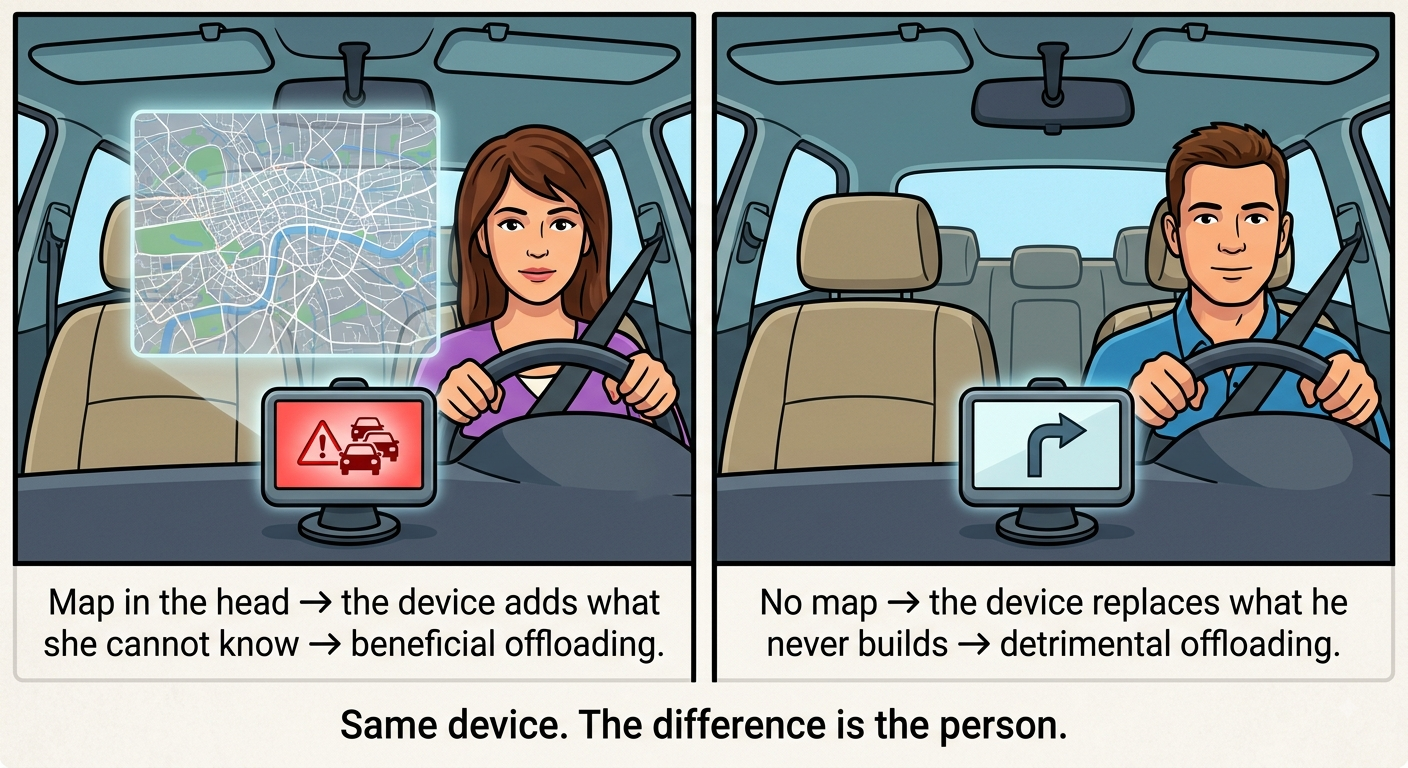
Fig. 1. The outcome depends on the driver. Image created with GoogleGemini.
ThatRecordad isesto: vosotros tenéis el conocimiento. Vuestro alumnado, en la materia que impartís, todavía no. Esa asimetría es todo el capítulo.
Dos plantas, no dos temas
En la literatura académica, estas dos áreas se consideran campos distintos. Podéis pensar en ellas como dos plantas de un edificio, con la mayoría del profesorado en la planta baja y sin escalera que lleve a decadela ofprimera researchplanta.
Cuando AIse useles inpidió oneque image,valorasen andsu itconocimiento holdssobre withoutIA, theel imageprofesorado too.en TheAlemania effectse of an AI tool depends far more on what the user already knows than on the tool itself. This is what researchers calldio a schema,sí themismo organizeduna priorpuntuación knowledgemedia ofde 3,4 sobre 5. Sin embargo, valoraron su capacidad de aplicar ese conocimiento en el aula mucho más baja, con un 2,6 sobre 5. El saber y el hacer se habían desconectado. Un ensayo en cinco países europeos puso a person.prueba Wheresi itla isformación inpodía place,cerrar handingesa workbrecha. overEn toel ensayo, 736 docentes de Francia, Irlanda, Italia, Luxemburgo y Eslovenia recibieron un curso y apoyo. Los resultados mostraron que su conocimiento y su capacidad para juzgar lo que una herramienta podía hacer aumentaron. Sin embargo, su forma de enseñar no cambió. Probaron cosas nuevas y volvieron a machinelo freesque youhacían up. Researchers call this beneficial cognitive offloading. However, when knowledge needs to be developed, the same process can prevent it from forming. This is called detrimental cognitive offloading.antes.
AEsta studyes withla aroundbrecha entre saber y actuar. Los cursos generan conocimiento, pero cambiar la práctica requiere acompañamiento, experimentación y compañeros con quienes pensar. La transferencia hay que diseñarla, no esperar a thousandque secondaryocurra.
Lo showsque thisel happeningprofesorado inhace aen mathematicsrealidad
El Onehallazgo groupmás practicedsólido withentre anpaíses unrestrictedes chatbot,sorprendente, anotheraunque without.de Whileforma theydiscreta: hadel it,profesorado theusa chatbotla groupIA solvedintensamente 48para sí mismo y casi nada con su alumnado. En Alemania, el 52 % moreusa practicela problems!IA Thenal camemenos anvarias examveces withal themes. chatbotSolo taken away. Now, the same students who solved practice problems so well scored 17% worse than the group that had never used the AI chatbot. A third group used an AI version built to withhold answers and ask questions instead. That group lost nothing.
That third group is the whole design question. A satnav that names the destination and helps you find the route teaches you the city. A satnav that says turn left in 200 meters does not, however good its data. Researchers call the difference guardrails, and the design decides whether you help your students learn the city's map or simply find the destination.
Please remember: You have the knowledge. Your students, in the subject you teach, do not yet. That asymmetry is the whole chapter.
Two floors, not two topics
In academic literature, these two areas are considered distinct fields. You could think of them as two floors of a building, with most teachers located on the ground floor and no staircase leading to the first floor.
When asked to rate their knowledge of AI, teachers at German vocational schools gave themselves an average rating of 3.4. However, they rated their ability to apply this knowledge in the classroom much lower, at 2.6. Knowing and doing had become disconnected. A trial across five European countries then tested whether training could close that gap. In the trial, 736 teachers in France, Ireland, Italy, Luxembourg and Slovenia were given a course and support. The results showed that their knowledge and ability to judge what a tool could do increased. However, their teaching did not change. They tried things and went back to what they had been doing before.
This is the knowledge–action gap. Courses produce knowledge, but changing practice needs accompaniment, trialing and colleagues to think with. Transfer has to be designed, not hoped for.
What teachers are actually doing
The most robust finding across countries is quietly surprising: teachers use AI intensively for themselves and hardly at all with their students. In Germany, 52% use AI at least once a month. Onlyel 29 % usela itusa inen lessonsclase withcon un grupo delante. Así que el debate público sobre «la IA en el aula» es, en gran medida, un debate sobre algo que todavía no ocurre a classgran inescala.
Lo ofque them.sí Soestá theocurriendo publices debateun aboutalivio "AIde inla thecarga classroom"de istrabajo, largelyy aquí las noticias son buenas. En un ensayo británico, 259 docentes de 68 escuelas recibieron apoyo de IA para planificar clases de ciencias para alumnado de 11 a debate13 aboutaños. somethingEl thattiempo isde notplanificación yetbajó happeningde at81 scale.a 56 minutos por semana. Cuando evaluadores independientes revisaron los materiales resultantes sin saber cuáles eran cuáles, no encontraron ninguna caída en la calidad. Las propias estimaciones del profesorado sobre el tiempo que ahorran en todas las materias son incluso mayores, en torno a seis horas semanales para quienes la usan con regularidad.
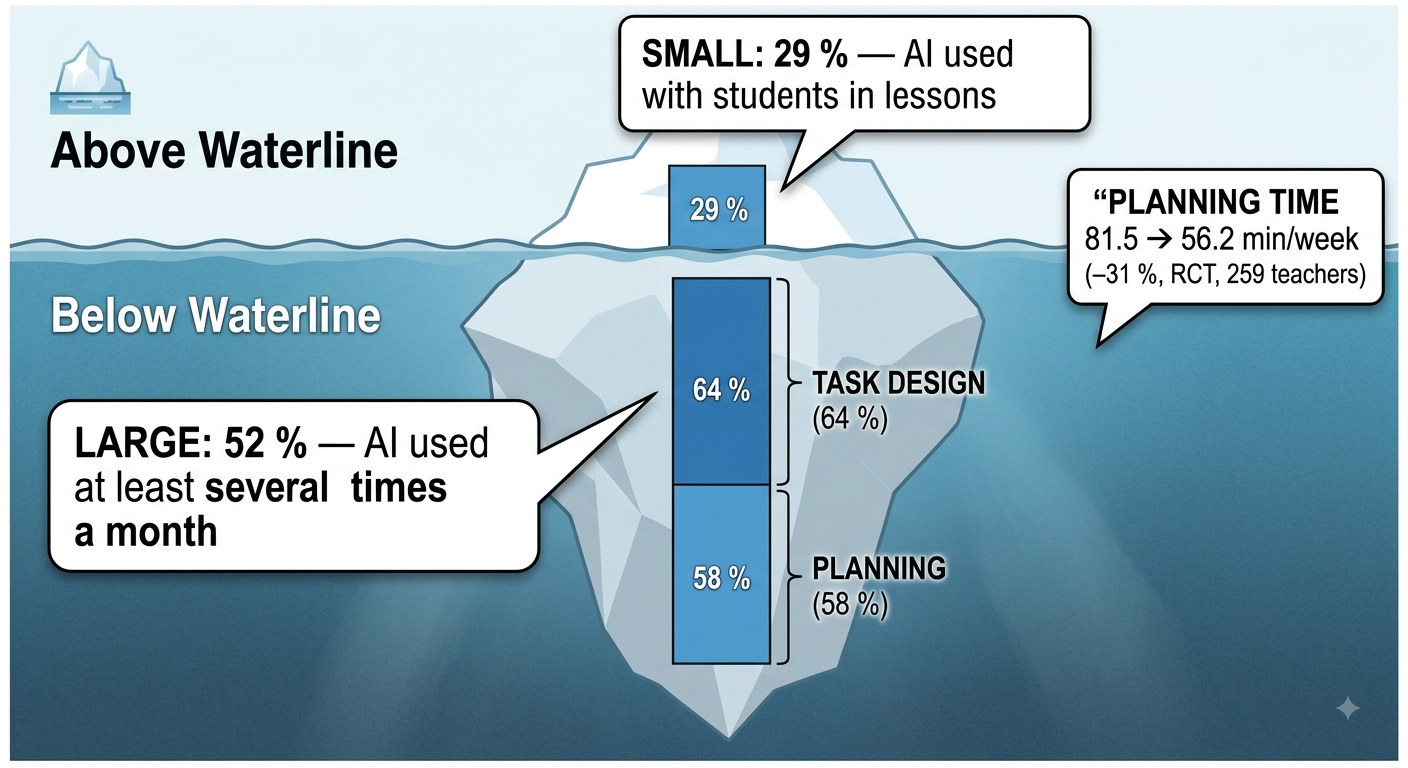
Fig.hay 2:un Differencepatrón inque AImerece use for preparation compared to usage in the classroom. Image created with GoogleGemini
What is happening is workload relief, and here the news is good. Indetenerse a Britishconsiderar. trial,En 259una teachersamplia acrossencuesta 68 schools were given AI support for planning science lessons for 11- to 13-year-olds. Planning time fellestadounidense, fromel 81profesorado tode 56escuelas minutescon auna weekpolítica de IA clara y por escrito declaró ahorrar alrededor de un cuarto más de tiempo que el profesorado de escuelas sin ella.. WhenSe independenttrata assessorsdel reviewedrelato thedel resultingpropio materials, they foundprofesorado, no dropde inuna quality.medición, Teachers'y ownuna estimatesencuesta ofno thepuede timemostrar theyen savequé acrossdirección allva subjectsla areflecha evencausal. higher,Puede atque aroundlas sixescuelas hoursbien aorganizadas weeksimplemente forhagan regularbien users.
Andcosas. onePero patternes islo worthcontrario pausingde on.lo Inque ala largemayoría Americanesperaría, survey,y teachersmerece inla schoolspena withseñalar aque clearnadie writtenha AIencontrado policylo reportedcontrario: savingallí aboutdonde ase quarterha moreestudiado time than teachers in schools without one. That is the teachers' own account rather than a measurement, and a survey cannot show which way the arrow runs. Well-organized schools may simply do both things well. But it is the opposite of what most people expect, and it is worth noting that nothing in the sources behind these points the other way: wherever this has been examinedesto, clearunas rulesreglas andclaras heavyy useun gouso together.intensivo van de la mano. -> 1.54 CompliantUso useConforme ofde AIla IA
WhyPor thequé toolla isherramienta notno thees pointlo importante
IfSi youbuscabais wantedun ranking de las mejores herramientas de IA, la investigación os decepcionará y luego, en una segunda lectura, os liberará. Cuando los investigadores reúnen muchos estudios separados y preguntan qué diferencia a rankinglas ofaulas thedonde bestla AIIA tools,ayudó themucho researchde willaquellas disappointdonde youapenas andayudó, then,la onrespuesta secondnunca reading,es setla youmarca free. When researchers gather many separate studies and ask what separates the classrooms where AI helped a great deal from those where it barely helped at all, the answer is never the brand ofdel software. ItEs islo whatque these studentspidió wereal askedalumnado toque dohiciera withcon it.ella.
ThereHay aretres threecomparaciones comparisonsque thatrealmente reallyilustran drive the point home.esto.
StudentsElwhoalumnadousedqueAIusótolatransformIAsomething,parae.g.,transformarreworkalgo,apordraftejemplo,orreelaborarbuildunonborradortheiroownconstruirattempt,sobregainedsuaboutpropiotwointento,andganóaaproximadamentehalfdostimesvecesasymuchmediaasmásstudentsquewhoelsimplyalumnadoheldqueasimplementeconversationmantuvowithunaaconversación con un chatbot.StudentsElwhoalumnadousedqueAIusóinlapairsIAgainedenaboutparejas70%logrómorecasithanelstudentsdoblewhoqueusedquienesitlaalone.usaron en solitario.AILawasIAusedsetousóprovideparafeedbackdaronretroalimentaciónstudentsobrework,elandtrabajoit'sdelfairalumnado,toysayesitjustomadedecironequeofprodujotheunabiggestdegainslasinmayoresthismejorasarea.enInestacontrast,área.usingEnAIcambio,tousarincorporatelagamificationIAintoparalessonsincorporarproducedelementosadegainjuegotooensmalllastoclasescallnoproven..produjo ningún beneficio.
PedagogyLa beatspedagogía technology, and byvence a widela margin.tecnología, Thisy ispor whatun happensamplio everymargen. timeEsto somebodyes sortslo theque studiesocurre bycada whatvez theque studentsalguien wereclasifica actuallylos doing. Twoestudios limitssegún shouldlo beque consideredel equally.alumnado realmente hacía. Deben considerarse igualmente dos límites.
GoodUna feedbackbuena isretroalimentación notno thees samelo asmismo feedbackque thatuna works.retroalimentación Inque onefunciona. experiment,En un experimento, 70 universityestudiantes studentsuniversitarios wroteescribieron anun argumentativeensayo essayargumentativo andy revisedlo itrevisaron una semana después. Se les asignó al azar a weektres later.grupos: Theyuno wererecibió assignedretroalimentación atde randomun toprofesor threeexperimentado, groups:otro onede gotun feedbackchatbot fromcon anuna experiencedinstrucción teacher,sencilla, oney fromotro del mismo chatbot instruido para razonar el ensayo paso a paso. Evaluada con la misma rúbrica, la retroalimentación del chatbot givenpaso a plainpaso instruction,fue andla onemejor fromde thelas sametres. Fue mejor que la del chatbot promptedsencillo toy reasonmejor throughque thela essaydel stepprofesor. byLuego step. Markedllegaron againstlas therevisiones, samey rubric,los thetres step-by-stepgrupos chatbotmejoraron producedaproximadamente the bestlo feedbackmismo. ofLa themejor three.retroalimentación Thedel feedback was better than the plain chatbot and better than the teacher. Then came the revisions, and all three groups improved by much the same amount. The best feedback in the study broughtestudio no moreprodujo improvementmás thanmejora theque lowest-ratedla feedback. Betterpeor commentsvalorada. didUnos notmejores comentarios no produjeron un mejor ensayo.
Esto merece un momento de reflexión porque desafía una suposición común: que una mejor retroalimentación produce aun bettermejor essay.aprendizaje. No es así, por sí sola. La retroalimentación solo sirve de algo si se pone en práctica: se lee, se entiende, se actúa en consecuencia y se comprende lo bastante bien como para que el estudiante pueda acertar sin ayuda la próxima vez. El cuello de botella es la puesta en práctica, no la calidad.
ThatDos deservescosas parecen interponerse en el camino, y ambas son manejables.
Más no siempre es mejor. En un segundo estudio, con 60 estudiantes de 4.º de la ESO y 240 textos escritos, la IA produjo muchos más comentarios relacionados con el contenido que el profesorado: 333 frente a moment241. becauseFueron itlos challengescomentarios del profesorado los que el alumnado puso en práctica más a commonmenudo. assumptionAnte thattreinta bettercorrecciones feedbackprecisas, leadsun toestudiante betterpuede learning.dejar Itde doesdiagnosticar not,y onempezar itsa own.priorizar, Feedbacko onlysimplemente doesobedecer. anythingSi ifun itestudiante issigue takenlas up:reglas read,al understood,pie actedde on,la andletra, understoodbásicamente wellestá enoughdiciendo thatque thela studentrevisión couldera getinnecesaria. itEs rightel unaidedGPS nextotra time.vez, Uptakepero isen theotro bottleneck,nivel. notOs quality.da una retroalimentación muy detallada, como «gira a la izquierda en 200 metros», aplicada a vuestro propio texto.
TwoQuién thingslo appeardice toimporta. getNo insabemos thecon way,certeza andpor bothqué arelos usable.comentarios del profesorado se ponen en práctica más a menudo. Esto es cuestión de interpretación, no de medición, pero la explicación más probable es que la retroalimentación se percibe como un acto entre personas. Lo que dice alguien que sabe lo que hicisteis el trimestre pasado y verá lo que hacéis con ello es diferente de la misma frase generada bajo demanda.
MoreQué isn'timplica alwaysesto better.para Inla práctica. Toda la evidencia que hemos visto sobre la retroalimentación automatizada muestra que funciona mejor cuando el alumnado toma lo aprendido en una tarea y lo aplica a seconduna study,tarea withnueva. 60Es Yearmenos 11eficaz studentscuando andsimplemente 240copian piecesy ofpegan writing,lo theaprendido AIdirectamente produceddel waytexto moreque content-relatedtienen commentsdelante. thanY thees teachersmucho did.más 333eficaz againstcuando 241.se Itusa wasdurante theun teachers'periodo commentsmás thatlargo, thecomo studentstodo actedun ontrimestre, moreen often.lugar Whende confronteduna withsola thirtyvez. preciseAsí corrections,que no deberíamos preguntarnos si la retroalimentación de la IA es lo bastante buena. Deberíamos preguntarnos si este estudiante tendrá que volver a studentusarla. mightSi eitherla stoprespuesta diagnosinges andno, startes triagingpoco orprobable justque comply.unos Ifmejores comentarios ayuden.
Y la misma división aparece a studentgran followsescala. theUn rules,equipo they're basically saying that the revision was unnecessary. It's the satnav again, but on a different level. It gives you really detailed feedback, like 'Turn left in 200 meters' for your own writing.
Who says it matters. We're not really sure why teacher comments are taken up more often. This is all about interpretation, not measurement, but the most likely explanation is that feedback is seen as an act between people. What someone who knows what you did last term and will see what you do with it has to say is different from the same sentence generated on request.
What follows for practice. All the evidence we've seen on automated feedback shows that it works best when students take what they've learned in one task and apply it to a new task. It's least effective when they just copy and paste what they've learned straight from the text in front of them. And it's way more effective when you use it over a longer period of time, like a whole term, rather than just in one go. So, we shouldn't be asking whether the AI's feedback is good enough. We should be asking whether this student will ever have to use it again. If the answer is no, better comments are unlikely to help.
And the same split shows up at scale. One team pooledcombinó 228 studies:estudios: AIla clearlyIA andmejoró consistentlyclara improvedy whatconsistentemente studentslo couldque produce,el whilealumnado anypodía gainproducir, inmientras theirque abilitycualquier toganancia plan,en monitorsu andcapacidad correctde theirplanificar, ownsupervisar learningy wascorregir smallsu enoughpropio toaprendizaje havefue beenlo chance.bastante Programmingpequeña showscomo itpara sharpest.deberse Studentsal withazar. anLa AIprogramación assistantlo weremuestra measurablycon faster,más andclaridad. El alumnado con un asistente de IA fue medible más rápido, y no bettermejor atal thefinal endque thanquienes thoseno withoutlo one.tenían. GettingHacer moremás doney andmejorar gettingno betterson arelo notmismo, they samela thing,IA andlos AI separates them.separa.
EuropeEuropa ascomo mirrorespejo
AcrossEn Europetoda theEuropa, shareel ofporcentaje teachersde usingprofesorado AIque runsusa fromIA oscila entre el 89 % inen CzechiaChequia toy el 14 % inen France.Francia. PleaseTened consideren that thecuenta surveysque differlas inencuestas methoddifieren anden timing,método soy readmomento, theasí spread,que notinterpretad theel individualrango, figures. no las cifras individuales.
FranceFrancia ises theel instructivecaso case.más Itinstructivo. builtConstruyó oneuno ofde thelos continent'sprogramas mostestatales ambitiousde stateIA AImás programs,ambiciosos andel AIcontinente, tutoringun schemesistema inde mathstutoría andcon French.IA Nevertheless,en Francematemáticas stilly sitsfrancés atpara theel bottomprimer ofcurso thatde table,bachillerato, asprobado onlyen 150 escuelas. Sin embargo, Francia sigue en la parte baja de esa tabla, ya que solo el 9 % ofdel Frenchprofesorado teachersfrancés haveha receivedrecibido anyalguna trainingformación inen AI,IA, comparedfrente witha roughlyaproximadamente el 38 % acrossen comparablepaíses countries.comparables. ProvidingProporcionar toolsherramientas ises thela easymitad halffácil, butpero qualificationla iscualificación thees halfla thatmitad decides.que decide.
TwoDos countriespaíses havehan writtenplasmado theel satnavproblema problemdel intoGPS policyen thesu waypolítica atal drivingcomo schoollo would:haría mapuna first,autoescuela: deviceprimero later.el Norwaymapa, recommendeddespués inel Junedispositivo. Noruega recomendó en junio de 2026 thatque generativela AIIA remaingenerativa essentiallyse outmantuviera ofesencialmente primaryfuera schoolde andla beeducación taughtprimaria onlyy inse lowerenseñara secondarysolo school,en wherela teacherseducación havesecundaria beeninferior, trained,donde andel AIprofesorado shouldha berecibido taughtformación, asy aque deliberatela skill.IA Luxembourgse stagesenseñara itcomo similarly.una Notecompetencia carefully:deliberada. NorwayLuxemburgo issuedlo aescalona recommendation,de notforma asimilar. bindingAtención: ban,Noruega howeveremitió theuna internationalrecomendación, pressno reporteduna it.prohibición vinculante, aunque así lo recogió la prensa internacional.
TheEl blindpunto spotciego
OneRara riskvez ofse AInombra isun rarelyriesgo named,de andla theIA, imagey reachesla itimagen too:también knowledgelo aboutalcanza: theel Londonconocimiento citydel map ismapa notde permanent.la Aciudad driverde whoLondres followsno thees arrowspermanente. forUna fiveconductora yearsque doessigue notlas keepflechas thedurante citycinco inaños herno head.conserva Itla fades,ciudad anden shela stopscabeza. noticingSe thedesvanece, dug-upy street.deja Yourde expertisenotar isla maintainedcalle byen doingobras. theVuestra verypericia thingsse AImantiene ishaciendo bestprecisamente ataquello absorbing:que writingla theIA task,mejor anticipatingabsorbe: theredactar misconceptionla andtarea, draftinganticipar theel explanation.error Whereconceptual AIy takeselaborar overla theexplicación. workCuando throughla whichIA judgmentse forms,hace reliefcargo turnsdel intotrabajo deskilling.mediante Inel acual Germanse expertforma panel,el criterio, el alivio se convierte en pérdida de competencia. En un panel de expertos alemán, el 65 % ofde educationlos expertsespecialistas identifieden thiseducación riskidentificó foreste theriesgo teachingpara profession,la risingprofesión fromdocente, frente al 44 % thedel yearaño before.anterior.
UseUsad theel satnav.GPS. JustPero keepconservad theel map.mapa.