
2.2 Biológia: Vibe coding simulácie v triede
Predator–PreyDynamika Dynamicsdravec–korisť (Lotka–VolterraLotkov–Volterrov model)
Subject:Predmet: BiologyBiológia · Grade:Ročník: 9 (agevek 14–14 – 15) · Duration:Trvanie: 1 double lessondvojhodina (90 min) · AI:SI: LearningUčenie WITHSA AI SI
| Kompetencie |
|---|
AF-TL-2b
(AIZáklady foundationsa andaplikácie applicationsSI × TeachingVyučovanie &a Learning,učenie, Levelúroveň 2 – ReflectiveReflektívna Implementation)implementácia):
„Učitelia dokážu organizovať prvky hodiny, ktoré zapájajú používanie SI s jasnými pedagogickými rolami a stratégiami na overenie výstupných prvkov.“Teachers can organise lesson elements that embed AI use with clear pedagogical roles and strategies to verify the output elements.”
AF-FC-2b
(AIZáklady foundationsa andaplikácie applicationsSI × FacilitatingPodpora Learners’digitálnej kompetencie (AI)SI) Digitalžiakov, Competence, Levelúroveň 2 – ReflectiveReflektívna Implementation)implementácia):
„Učitelia dokážu poskytovať vedenie, ktoré pomáha žiakom rozvíjať praktické zručnosti v oblasti SI, pričom prispôsobujú úlohy predchádzajúcim vedomostiam žiakov a dostupným nástrojom SI.“Teachers can implement guidance that helps learners developing practical AI skills, adapting the tasks to learners’ prior knowledge and the AI tools available.”
ByNa thekonci endhodiny ofžiaci the lesson, students can:dokážu:
describeopísaťthekľúčovékey variablespremenné (preypopuláciapopulation,koristi,predatorpopuláciapopulation)dravcov)andaparametersparametre (growthmierarate,rastu,predationmierarate,predácie,conversionúčinnosťefficiency,konverzie,mortalitymierarate)úmrtnosti)ofLotkovho–Volterrovhothe Lotka–Volterra model;modelu;formformulovaťandatesttestovaťhypotheseshypotézyaboutopopulationdynamikedynamicspopuláciíusingpomocouaninteraktívnejinteractive simulation;simulácie;extendrozšíriťanexistujúcuexistingsimuláciusimulationowithďalšieadditionalvrstvylayersekologickejof ecological complexityzložitosti (e.g.napr. nosnú kapacitu prostredia, druhý druh, sezónny faktor) písaním štruktúrovaných promptov pre jazykový model SI;
Take-homeHlavnémessage:posolstvo:StudentsŽiacidon'tnemusianeedprogramovaťtoodcodenuly.fromČítaniescratch.aReadingtestovanieandexistujúcejtestingsimulácie,anaexistingnáslednésimulation, then using anpoužitie LLMtonaaddpostupnéonepridávanielayerjednotlivýchofvrstievecologicalekologickéhorealismrealizmu,atstačí na vybudovanie skutočného porozumenia dynamickému biologickému modelu — atime,skôrisčienoughneskôrtoajbuildnagenuineto,understandingabyofsamiaobjavili,dynamicpresnebiologicalkde tento model—dosahujeand,svojesooner or later, to discover for themselves exactly where that model reaches its limits.hranice.
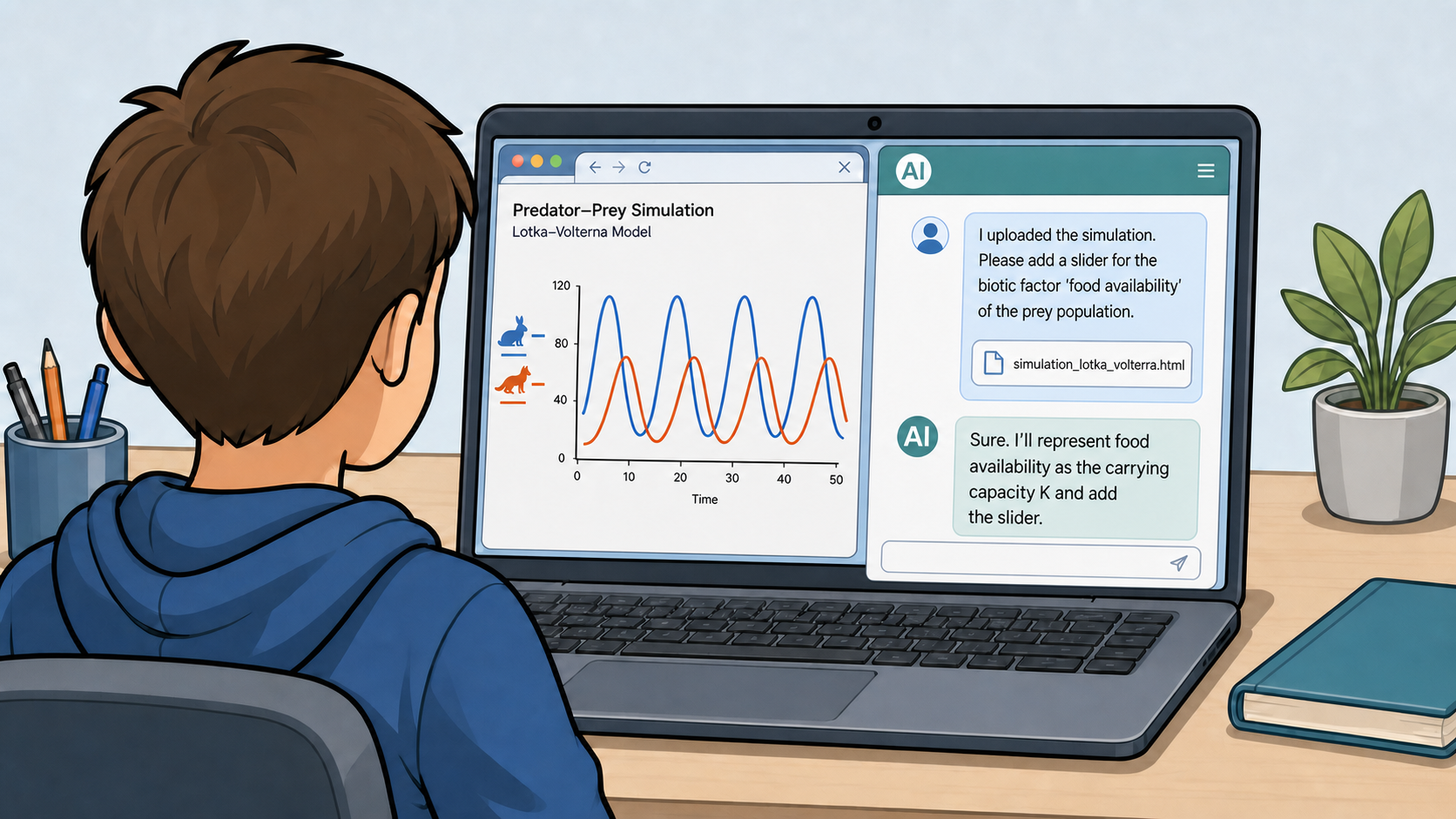
FigObr. 1. ImageObrázok generatedvygenerovaný withpomocou ChatGPT (GPT Image 2), August27. 27,augusta 2026.
ContentObsah
MathematicalMatematické modelsmodely anda computerpočítačové simulationssimulácie aresú especiallyv valuableekológii toolsobzvlášť cenné nástroje, pretože dokážu vyjadriť vysoko komplexné systémy prostredníctvom matematických rovníc. To umožňuje vykonávať experimenty in ecology,silico becausea theytestovať canhypotézy expressna highlymodeli complexv systemssituáciách, throughkde mathematicalby equations.skutočný Thisexperiment makesbol itpríliš possiblenákladný, príliš pomalý, eticky problematický alebo priamo nebezpečný. Manipulácia so skutočnou populáciou dravcov je napríklad len zriedka reálnou možnosťou. Zároveň je každý model nevyhnutne zjednodušením reality, a práve v tom spočívajú jeho slabiny: skutočné ekosystémy sú oveľa komplexnejšie, než dokáže akýkoľvek model plne zachytiť.
Lotkov–Volterrov model je klasickým príkladom takéhoto zjednodušenia aplikovaného na dynamiku dravec–korisť. Systém vyjadruje pomocou dvoch stavových premenných (veľkosť populácie koristi a dravcov) a štyroch parametrov (vnútorná miera rastu koristi, koeficient miery predácie, miera reprodukcie dravca na jednu skonzumovanú korisť a miera úmrtnosti dravca). Za svojich idealizovaných predpokladov model predpovedá trvalé, periodické oscilácie, v ktorých zmeny v populácii dravcov zaostávajú za zmenami v populácii koristi. Toto správanie vzniká zo spätnoväzbovej slučky: keď populácia koristi rastie, dravcom je k dispozícii viac potravy, čo umožňuje rast populácie dravcov. Zvýšená predácia následne spôsobuje pokles populácie koristi, čo znižuje potravnú ponuku pre dravcov a vedie k poklesu ich populácie. S menším počtom dravcov sa populácia koristi môže zotaviť a cyklus začína odznova.
Aby model vytvoril tento čistý cyklus, robí niekoľko silných predpokladov. Je deterministický (rovnaké počiatočné hodnoty vždy vytvoria presne rovnakú krivku); je to runuzavretý experimentsdvojdruhový insystém, silicoktorý andvylučuje testkaždý hypothesesabiotický onfaktor the(teplota, modelzrážky, inročné situationsobdobie) whereaj každý iný biotický faktor (rastliny ako potrava koristi, tretí druh, choroba); a realrast experimentkaždej wouldpopulácie berobí toozávislým costly,výlučne toood slow,veľkosti ethicallytej difficult,druhej.
Skutočné outrightpopulácie dangerous.tieto Manipulatingpredpoklady len zriedka spĺňajú. Narodenia, úmrtia a realstretnutia predatorpodliehajú population, for instance, is rarely an option. At the same time, every model is necessarilynáhode a simplificationstochastická of(randomizovaná) verzia toho istého modelu má tendenciu odchyľovať sa od čistého cyklu a môže dokonca skolabovať (napr. vyhynutím populácie dravcov) v prípadoch, keď deterministická verzia predpovedá stabilnú osciláciu. Podobne, pridanie čo i len jedného chýbajúceho faktora (napr. rastová miera závislá od teploty alebo obmedzenie vlastnej potravnej ponuky koristi) často stačí na narušenie čistého dvojpremenného cyklu. Toto nie je nedostatok, ktorý treba pred žiakmi skrývať — je to ústredná lekcia o podstate vedy v rámci tejto aktivity. Model môže byť naozaj užitočný a zároveň zámerne úzkou aproximáciou reality, and this is exactly where its weaknesses lie: real ecosystems are far more complex than any model can fully capture.
The Lotka–Volterra model is a classicjeho exampledobré ofpoužívanie suchznamená apresne simplificationpoznať, appliedktoré faktory vynecháva. V hlavnej aktivite tejto hodiny na to predator–preyžiaci dynamics.prídu Itsami representstým, theže systemsa usingpokúsia twopridať statepresne variablestakéto (the prey and predator population sizes) and four parameters (the prey’s intrinsic growth rate, the predation-rate coefficient, the predator’s reproduction rate per prey consumed, and the predator’s mortality rate). Under its idealized assumptions, the model predicts sustained, periodic oscillations in which changes in the predator population lag behind those in the prey population. This behavior arises from a feedback loop: as the prey population increases, more food becomes available to predators, allowing the predator population to grow. Increased predation then causes the prey population to decline, which reduces the predators’ food supply and leads to a decline in the predator population. With fewer predators, the prey population can recover, and the cycle begins again.
To produce this clean cycle, the model makes several strong assumptions. It is deterministic (the same starting values always produce exactly the same curve); it is a closed two-species system that excludes every abiotic factor (temperature, precipitation, season) and every other biotic factor (food plants for the prey, a third species, disease); and it makes each population's growth depend on nothing except the size of the other population.
Real populations rarely meet these assumptions. Births, deaths and encounters are subject to chance, and a stochastic (randomised) version of the same model tends to drift away from the clean cycle and can even collapse (e.g. the predator population dying out) in cases where the deterministic version predicts stable oscillation. Likewise, adding just a single missing factor (e.g. a temperature-dependent growth rate, or a limit on the prey's own food supply) is often enough to break the clean two-variable cycle. This is not a flaw to hide from students, it is the central Nature-of-Science lesson of the activity. A model can be genuinely useful, while still being a deliberately narrow approximation of reality and using it well means knowing exactly which factors it leaves out. In this lesson's main activity, students discover this for themselves by trying to add exactly these kinds of factors.faktory.
LessonPlán planhodiny
PairsDvojice workprejdú throughtoľko asz manynasledujúcich ofkôl, thekoľko followingim roundsdovolí asčas timev allows in therámci 35 minutesminút (mostväčšina managezvládne two;dve; thetretie thirdkolo isje anrozšírenie extensionpre fortých, earlyktorí finishers)skončia skôr). EachKaždé roundkolo followsnasleduje therovnaký sameštvorkrokový four-step cycle:cyklus:
RoundKolo 1 —limitobmedzeniethepotravnejprey'sponukyfood supplykoristi (anosnácarryingkapacitacapacity)prostredia):Predict:Predikcia:BeforeSkôryounežstartzačneteprompting, aks yourself: what do you expect to happen to the cycle if the prey'sgrowthpromptovaním,slowsopýtajtedownsaoncesamitheseba:populationčogetsočakávate,large,žeinsteadsaofstanegrowingswithoutcyklom,limit?akSketchsatherastcurvekoristiyouspomalí,expect.keď populácia narastie, namiesto neobmedzeného rastu? Nakreslite krivku, ktorú očakávate.- Prompt:
AskPožiadajtetheSI,AIaby do simulácie pridala maximálnu udržateľnú populáciu koristi a aby vlastnými slovami vysvetlila, ako na toaddzmenilaarovnicumaximum sustainable prey population to the simulation, and to explain in its own words how it changed the growth equation to do this.rastu. - Test
&acompare:porovnanie:RunSpustitethenovúnewsimuláciusimulationswithrovnakýmithepočiatočnýmisamehodnotamistartingakovaluespredtým.asPorovnajtebefore.predchádzajúcuComparesimuláciuthespreviousnovou:simulationakowithsathezmenilinewpremenné?one:Prečohowjedidtothe variables change? Why is that?tak? Diagnose:Diagnóza:WhichKtorýassumptionpredpokladofpôvodnéhothe original modelmodelu (unlimitedneobmedzenáfoodpotravaforprethekorisť)prey)stedidpráveyouodstránili?justJeremove?tentoIsfaktorthisbiotický,factoralebobiotic or abiotic?abiotický?
RoundKolo 2 —addpridanieanotherďalšieho (bioticbiotickéhooraleboabiotic)abiotického)factor:faktora:Predict:Predikcia:IfAkaterazthirdsspecieskorisťounowocompetespotravuwithsúperíthetretípreydruh,foralebofood,juortiežpreysloví,onaleboitakasrastwell,koristiorterazifzávisípreyodgrowthteplotynow—dependsčoonočakávate,temperature what do you expect thisže todourobítosthepôvodnýmoriginaldvojdruhovýmtwo-species cycle?cyklom?- Prompt:
ChooseVyberteanothersifactorďalšíand writefaktor apromptnapíšteaskingprompt,thektorýAIpožiadatoSI,addabyithoaspridalaaakonewnovúvariablepremennúlinkedprepojenútosthe existing onesexistujúcimi —specifypresneexactlyšpecifikujte,howakoitmáshouldinteragovaťinteractswithpopuláciouthekoristipreyaleboor predator population.dravcov. - Test
&acompare:porovnanie:ObservePozorujtethesimuláciusimulationpočasoverniekoľkýchseveralcyklov.cycles.PrežijeDoespôvodnýthedvojdruhovýoriginalrytmus,two-speciesskreslírhythmsa,survive,aleboget distorted, or disappear?zmizne? Diagnose:Diagnóza:The originalPôvodný modelassumedpredpokladal,eachžepopulationkaždádependspopuláciaonlyzávisíonlentheodother.tejIsdruhej.thatPlatístilltotruestáleafterajthisporound?tomtoWhatkole?realAkýecologicalskutočnýrelationshipekologickýdoesvzťahyourpredstavujenewvášfactornovýrepresent.faktor?
OptionalVoliteľnéroundkolo 3 —introducezavedenierandomness:náhodnosti:Predict:Predikcia:IfAkonejeden parameter (e.g.napr.themierapredationpredácie)rate)užisnienojelongerpevný,fixedalebutjedrawnprirandomlykaždomwithinčasovomakrokurangenáhodneatvybranýeachztimeurčitéhostep,rozsahu,whatčodoočakávateyoupreexpectdlhodobúforstabilituthe long-term stability of the populations?populácií?- Prompt:
AskPožiadajtetheSI,AIabytonahradilareplacejedenone constantkonštantný parameterwithrandomizovanou hodnotou arandomisedsledovala,valuečiandniektorátozkeeppopuláciítrackdosiahneof whether either population reaches zero.nulu. - Test
&acompare:porovnanie:RunSpustitethesimuláciusimulationniekoľkokrátseveralstimesrovnakýmwithnastavením.theDostávatesamezakaždýmsettings.rovnakýDovýsledok?youSkolabujegetniekedytheniektorásamezresult every time? Does either population ever collapse?populácií? Diagnose:Diagnóza:WhyPrečocanmôžuthetiesameisté“average”„priemerné“parameterhodnotyvaluesparametrovsometimesniekedyleadviesť k vyhynutiu, keď toextinction here, when the deterministicdeterministický modelnevernikdypredicted that?nepredpovedal?
ClosingZáverečná questionotázka (forpre thefázu Reflectreflexie): phase):V Atktorom whichkole roundprestala didsimulácia theprodukovať simulationčistý, stopopakujúci producingsa cyklus — a clean,čo repeatingvám cycleto —hovorí ando whattom, doeskoľko thatreálnych tellfaktorov youmusí aboutpôvodný how many real-world factors the original Lotka–VolterraLotkov–Volterrov model hasvynechať, toaby leavezostal outriešiteľný ina orderľahko to stay solvable and easy to interpret?interpretovateľný?
MaterialsMateriály
OneJedenlaptopnotebookpersstudentprehliadačompair,prewithkaždúadvojicubrowseržiakovAccessPrístuptokanchatovaciemu rozhraniu LLMchat interface via thecez internet,oraleboalokálnelocallynainštalovanýinstalledmodel,modelakifje prístup na internetaccessvisškolerestricted at schoolobmedzenýReady-madeHotová HTMLpredator–preysimuláciasimulationdravec–korisť (singlejedenfile,súbor,slidersposuvníkyforpreselectedvybranéparameters)parametre)AKrátkashortšablónapromptingpromptovania /worksheetpracovnéhotemplatelistuforprethekolá“layering„vrstveniacomplexity” roundszložitosti“ (predictpredikcia → prompt → test →diagnose)diagnóza)GuidingNavádzajúcequestionsotázkyforprethefázuexplorationskúmaniaphaseaandreflexiutheoNature-of-Sciencepodstatereflectionvedy (modelúčelpurposemodelu vs.modelhranicelimits)modelu)