1.1 Potencial y Riesgos
IfSiyousolorememberrecordáisonlyunaonefrasesentencedeformestathis page:página:AIlahasIAmadehaits way into schools likellegado amedicinelasthatescuelascomescomowithoutunamedicamentopatientqueinformationvieneleaflet.sinAsprospecto.aComoteacher, you don’t know when to use AI, you lack dosage instructions, and there isdocente, noinformationsabéisoncuándotheusarsidelaeffects.IA,Thisoschapterfaltanserveslasasinstruccionesthedepatientdosificacióninformationyleafletnoforhaytheinformación sobre los efectos secundarios. Este capítulo sirve como el prospecto del Playbook.
Should¿Debería AIla comeIA withvenir acon leafletun likeprospecto, acomo medicine?un medicamento?
PotentialsPotencial ofde AIla IA
Let'sDejemos makeesto thisclaro cleardesde rightel fromprincipio. theLa start.mayoría Mostde studieslos onestudios AI'ssobre potentialel focuspotencial onde universityla students.IA Schoolse pupilscentran haveen soestudiantes faruniversitarios. featuredEl relativelyalumnado rarelyescolar inha theseaparecido studies.hasta Mostahora studiesrelativamente relatepoco toen short-termestos interventionsestudios. lastingLa frommayoría de los estudios se refieren a few hours tointervenciones a fewcorto weeks.plazo, Consequently,que theduran so-calleddesde noveltyunas effecthoras mayhasta haveunas positivelysemanas. influencedEn theconsecuencia, results.el Lastllamado butefecto notnovedad least,puede thehaber testinfluido usedpositivamente toen assesslos effectivenessresultados. wasPor oftenúltimo, devisedpero byno themenos veryimportante, peoplela whoprueba deliveredutilizada thepara lessons.evaluar This,la too,eficacia maya havemenudo confoundedfue thediseñada data.por las mismas personas que impartieron las clases. Esto también puede haber distorsionado los datos.
(1) LetDejad AIque explainla IA explique un tema nuevo y reservad la práctica para vuestra clase
Imaginad esto. Mañana, cuando un alumno o alumna se pierda un tema o necesite que le expliquen de nuevo ese concepto complicado, dejad que un tutor de IA se encargue de la primera explicación. Reservad la práctica para vuestra clase, donde cobra vida el aprendizaje real.
Por qué es importante. La IA puede apoyar la adquisición de conocimiento factual. En un estudio de Harvard, 194 estudiantes de física aprendieron dos temas. Para uno de los temas, usaron un tutor de IA desarrollado para este fin. Para el otro tema, aprendieron en una clase tradicional. Cada estudiante completó ambos enfoques, de modo que nadie puede alegar que el grupo más fuerte recibió el mejor tratamiento. En una prueba realizada inmediatamente después, los estudiantes enseñados por la IA obtuvieron resultados significativamente más altos. Los investigadores registraron un tiempo mediano de 49 minutos para completar la tarea, frente a newlos topic60 andminutos keepasignados thepara practicela forclase youren lessonel
Imaginehorario. this.Los Tomorrow,autores whenson cautelosos al interpretar estos resultados: el material era nuevo para los estudiantes, y gran parte de la tarea consistía simplemente en explicarlo bien. Rechazan expresamente la idea de que lo mismo se aplicaría a pupiltareas missesque requieren integrar múltiples ideas. Además, se trataba de estudiantes universitarios, no de alumnado de secundaria.
Una amplia revisión que combinó los resultados de 228 estudios llegó a topicuna orconclusión needssimilar. thatLos trickychatbots conceptbasados explaineden yetIA again,generativa letprodujeron anun AIefecto tutormayor handlesobre theel firstconocimiento explanation.(y Reservela thecomprensión) practiceque forlos yoursistemas lesson,de wheretutoría realinteligente learningy comesel alive.software de práctica adaptativa.
WhyPara this matters. AI can support acquisition of factual knowledge. In a Harvard study, 194 physics students learned two topics. For one topic, they used an AI tutor developed for this purpose. For the other topic, they learned in a traditional class. Each student completed both approaches, so no one can claim that the stronger group received the better treatment. In a test conducted immediately afterward, the students taught by the AI achieved significantly higher results. The researchers recorded a median time of 49 minutes to complete the task, compared with the 60 minutes allocated for the lesson in the timetable. The authors are cautious in their interpretation of these results: the material was new to the students, and much of the task simply involved explaining it well. They expressly reject the idea that the same would apply to tasks requiring the integration of multiple ideas. Furthermore, these were undergraduate students, not Year 8 pupils.
A large review pooling the results of 228 studies came to a similar conclusion. Generative AI-based chatbots produced a larger effect on knowing (and understanding) than intelligent tutoring systems and adaptive practice software.
Go deeper.profundizar. Kestin, G., Miller, K., Klales, A., Milbourne, T., &y Ponti, G. (2025). AI tutoring outperforms in-class active learning: An RCT introducing a novel research-based design in an authentic educational setting. Scientific Reports, 15, Articleartículo 17458. FreeAcceso access,libre, DOI 10.1038/s41598-025-97652-6. TheEl articleartículo describesdescribe howcómo these diseñó y controló el tutor. Esto resulta útil para quien desee desarrollar su propio tutor wasde designed and controlled. This is useful for anyone wishing to develop an AI tutor themselves.IA.
(2) MakingAprovechar bettermejor useel oftiempo lessonde planningplanificación timede las clases
ImagineImaginad this.esto. SaveAhorrad someparte ofdel thetiempo timeque younecesitáis needpara forplanificar lessonlas planningclases byutilizando usingla AIIA topara draftredactar yourun firstprimer lessonborrador plande andvuestra thenplanificación revisey itluego thoroughly.revisarlo a fondo.
WhyPor thisqué matters.es Noimportante. oneNadie disputesdiscute thatque teachers’la workloadscarga arede heavy.trabajo Therefore,del oneprofesorado potentiales benefitalta. ofPor AIello, isuno usingde workinglos hoursposibles morebeneficios efficiently.de Ala UKIA studyes investigatedaprovechar themejor extentlas tohoras whichde thetrabajo. targetedUn useestudio ofbritánico AIinvestigó foren lessonqué planningmedida canel helpuso toespecífico reducede teachers’la workload.IA Researcherspara randomlyplanificar assignedclases puede ayudar a reducir la carga de trabajo docente. Los investigadores asignaron aleatoriamente a 259 scienceprofesores teachersde atciencias de 68 schools to eitherescuelas a groupun usinggrupo que usaba un chatbot junto con breves instrucciones escritas o a chatbotun alongsidegrupo briefque writtencontinuaba instructionsplanificando orlas clases como de costumbre. El tiempo semanal de planificación para las clases de ciencias de 1.º y 2.º de la ESO se redujo de unos 81 minutos a group that continued lesson planning as before. The weekly planning time for science lessons in Years 7 and 8 fell from around 81 minutes to aroundunos 56. AUn panel ofde subjectespecialistas expertsen assessedla themateria qualityevaluó ofla thecalidad lessonde plans.las Theyplanificaciones, didsin notsaber knowsi whetherestas these planshabían hadcreado beencon createdo withsin orayuda withoutde thela aidIA. ofLos AI. The experts foundespecialistas no evidenceencontraron topruebas suggestde thatque thela qualitycalidad ofde thelas lessonplanificaciones plansdifiriera. differed.Sin However,embargo, twodeben pointsdestacarse mustdos be highlighted.puntos. (1) TheEl teachersprofesorado usedutilizó thela toolherramienta lesscada andvez lessmenos asa themedida weeksque wentpasaban on,las meaningsemanas, thatlo theque timesignifica savedque doesel nottiempo occurahorrado automaticallyno andse doesproduce notautomáticamente sustainni itself.se mantiene por sí solo. (2) TheEl trialensayo measuredmidió theel timetiempo spentque byel teachersprofesorado ondedicaba lessona planning,planificar notlas theirclases, pupils’no learninglos outcomes.resultados de aprendizaje del alumnado.
GoPara deeper.profundizar. Roy, P., Poet, H., Staunton, R., Aston, K., &y Thomas, D. (2024, 12 December)de diciembre). ChatGPT in lesson preparation: A Teacher Choices Trial. NFER, commissionedencargado bypor thela Education Endowment Foundation andy thela Hg Foundation. FreeGratuito aten educationendowmentfoundation.org.uk.
(3) ProvidingOfrecer bettermejor supportapoyo foral learnersalumnado whoque dono notse benefitbeneficia fullyplenamente fromde standardlas lessonsclases estándar
ImagineImaginad this.esto. YourVuestra schoolescuela decidesdecide howcómo itquiere wishesgastar tosus spendfondos. itsQuiere funds.comprar It wants to purchase an AI chatbot. How likely do you think it is that theun chatbot providersde willIA. provide¿Qué youprobabilidad withcreéis evidenceque ofhay thede bot’sque benefitslos forproveedores differentdel subjects?chatbot os aporten pruebas de los beneficios del bot para las distintas materias?
WhyPor thisqué matters.es Theimportante. providerEl mayproveedor pointpuede outseñalar thela followingsiguiente application.aplicación. ChatbotsLos arechatbots theson oldestla andaplicación best-documentedmás applicationantigua ofy ‘AI’mejor indocumentada education,de andla this«IA» isen preciselyeducación, whaty isesto oftenes overlookedprecisamente whenlo allocatingque funds.a Inmenudo anse analysispasa ofpor alto al asignar fondos. En un análisis de 29 studiesestudios involvingcon 41 groupsgrupos ofde learnersalumnado withcon disabilities,discapacidad, researcherslos foundinvestigadores moderateencontraron benefitsbeneficios acrossmoderados en una amplia variedad de contextos. Pero leed la letra pequeña. En siete de cada diez de estos estudios, «IA» significaba un robot: una pequeña máquina física situada sobre una mesa, a widemenudo rangeoperada ofpor settings.un Butinvestigador readdesde theotra smallsala. print.Solo Inuno sevende outcada ofcinco tenestudios ofutilizó thesesoftware. studies,Por ‘AI’tanto, meantesto no es prueba de que un chatbot vaya a robot:ayudar a smallun physicalalumno machineautista sittingen onvuestra aclase. table,Tampoco oftenpudieron operatedlos byrevisores adeterminar researcherqué inhace anotherque room.estas Onlyintervenciones onesean ineficaces. fiveA studiespartir usedde software.su So this isinvestigación, no proofpudieron thatidentificar apor chatbotqué willlos helpestudios anque autisticfuncionaron pupildiferían inde yourlos class.que Norno couldlo the reviewers say what makes these interventions effective. Based on their research, they could not identify why the studies that worked differed from those that did not.hicieron.
GoPara deeper.profundizar. Zhang, L., Carter, R. A., Jr., Liu, Y., &y Peng, P. (2026). Let's CHAT about artificial intelligence for students with disabilities: A systematic literature review and meta-analysis. Review of Educational Research, 96 (96(1). DOI 10.3102/00346543241293424. TheLa realverdadera gemjoya ises thela tabletabla ofde includedestudios studies:incluidos: itrevela instantlyde revealsinmediato justlo howpoco littleque ofeste thiscampo fieldse actuallycentra focusesrealmente onen thelas toolsherramientas currentlyque beinghoy marketedse tocomercializan schools.para las escuelas.
(4) TeachingEnseñar learnersal howalumnado AIcómo failsfalla la IA
ImagineImaginad this.esto. Ask your class to create ten images of 'a doctor' and ten of 'a nurse.' Tally up who appears in each set, then sparkPedid a discussion:vuestra whereclase didque thesecree patternsdiez comeimágenes from,de and«un whomédico» madey thosediez choices?de «una enfermera». Contad quién aparece en cada conjunto y luego iniciad un debate: ¿de dónde vienen estos patrones y quién tomó esas decisiones?
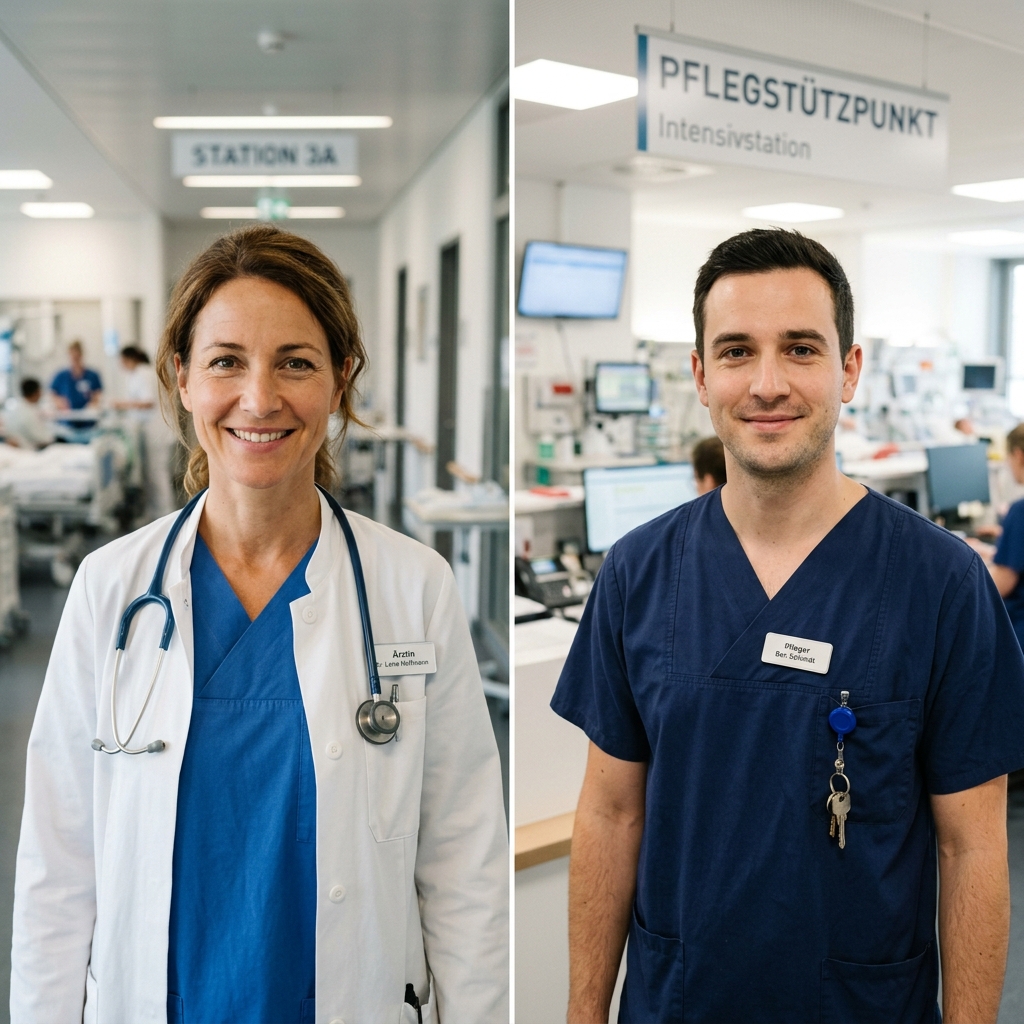
FigFig. 1. ImageImagen createdcreada withcon NanoBanana 2, createdcreada August,el 20,20 2026,de Oneagosto shotde prompt:2026. Prompt de un solo intento: a doctor, a nurse (un médico, una enfermera)
WhyPor thisqué matters.es Theimportante. classicLa versionversión ofclásica thisde lessonesta feelslección outdated,puede andparecer thatanticuada, isy exactlyprecisamente whypor iteso deservesmerece attention.atención. ForDurante years,años, thela demonstrationdemostración wasera predictable:predecible: askpedir forun médico y aparecía un hombre. En una prueba sistemática, Midjourney representaba casi siempre a doctor,los andmédicos acomo manhombres appears.blancos, Inmientras one systematic test, Midjourney almost always pictured doctors as white men, whileque Adobe Firefly madehacía visible,intentos ifvisibles, imperfect,aunque attemptsimperfectos, tode diversify.diversificar.
TryProbad thehoy sameel mismo prompt today,y andpuede youque mightaparezca seeuna amédica femaleo doctorun or a male nurse appearenfermero (Fig. 1). ButPero dono notos bedejéis fooledengañar intopensando thinkingque theel biassesgo hasha vanished.desaparecido. AUn análisis de 2026 analysisde of1344 1,344imágenes imagesde fromtres threegeneradores popularpopulares generatorsreveló revealedlo thecontrario: opposite:al whenpedir askeduna for«persona competente», un sistema no mostró ninguna mujer.
Lo que ha cambiado no es el sesgo, sino la capa en la que vive, ¡y esa es la lección importante! Detrás de todas estas imágenes hay decisiones humanas: con qué se entrenó el sistema y qué decidieron después sus creadores que debía mostrar. Esta segunda decisión es ajustable, invisible y la toma una empresa.
Whatrastro changedalguno isen notla thepropia biasimagen. butAquí theocurren layertres itcosas, livescada inuna -descrita andpor thissus thecreadores importanten lesson!sus Humanpropias decisions stand behind any of these pictures: what the system was trained on, and what its makers afterward decided it should show. The second is adjustable, invisible, and made by a company.
YourVuestraswordspalabrasareserewrittenreescribenbeforeantesthedemodelquereceiveselthem.modelo las reciba.FromSegúnOpenAI’slaownpropiadeveloperdocumentacióndocumentation:para“wedesarrolladoresusede OpenAI: «usamos GPT-4toparaoptimizeoptimizaralltodosof yourvuestros promptsbeforeantesthey’redepassedpasarlostoa DALL-E”E» —andy“this«estafeaturefunciónisn’tnoablesetopuedebedesactivardisabledporatelthemomento».moment.”LoWhatqueyourescribiópupilvuestrotypedalumnoisnonoteswhatlothequemachinesewasleasked.pidió a la máquina.AppearanceElgetsaspectofilledseincompletawhencuandotheel promptleavesloitdejaopen.abierto. OpenAI,describingdescribiendoitssudiversitytécnicatechnique:de“Thisdiversidad:technique«Estaistécnicaappliedseataplicatheasystemnivelleveldewhensistema cuando se le da a DALL·Eisungivenprompt que describe apromptunadescribingpersonaasinpersonespecificarthatrazadoesonotgénero,specify race or gender, like ‘firefighter.’” Afterwards, users were twelve times more likely to say the images showed people of diverse backgrounds.como “Abombero”».doctor”Despuésisdeexactlyaplicarla,thatloskindusuariosoftenían doce veces más probabilidades de decir que las imágenes mostraban personas de orígenes diversos. «Un médico» es exactamente ese tipo de prompt.AndYthatesetuningajustecanpuedemiss.fallar. Google,aftertraspausingpausarGemini’slaimagegeneracióngenerationdeinimágenes de Gemini en 2024:“Our«Nuestrotuningajustetoparaensuregarantizarthatque Geminishowedmostraraaunarangevariedadofdepeoplepersonasfailednototuvoaccountenforcuentacaseslosthatcasosshouldenclearlylosnotqueshowclaramenteanorange.”debía mostrarse esa variedad».
Esta shiftes onla lección que merece la atención del alumnado, y perdurará más allá de la próxima actualización del modelo: la imagen no es un simple reflejo de la realidad, y no ocurrió por casualidad. Alguien tomó una decisión.
Esta lección puede empezar pronto. Cuando 209 estudiantes finlandeses de 12 clases de 4.º y 7.º curso exploraron este tema, el porcentaje que podía explicar el sesgo usando datos pasó de unos 7 de cada 100 a Tuesday,44 quietly,de withoutcada warning.100. ThatLa truthreserva endureshonesta: throughel everyestudio newmidió model.lo Theque stereotypelos lessonniños fadesy away.
Thispodían isexplicar, theno lessonlo thatque deservesharían amás student's attention, and it will outlast the next model update: the image is not a simple reflection of reality, and it did not happen by chance. Someone made a choice.adelante.
ThisPara lessonprofundizar. can start early. When 209 Finnish students in 12 classes, grades 4 and 7, explored this topic, the number who could explain the bias using data jumped from about 7 out of 100 to 44 out of 100. The honest reservation: the study measured what children could explain, not what they would do later.
Go deeper. Vartiainen, H., et alal. (2025). Enhancing children's understanding of algorithmic biases in and with text-to-image generative AI. New Media & Society, 27(27(9). Free,Gratuito, DOI 10.1177/14614448241252820
Weinmann, H., et alal. (2026). Gender bias in text-to-image generative artificial intelligence: Neglect and stereotypical presentations across three popular platforms. New Media & Society, Online First
How¿Qué solidsolidez aretienen theen researcheste resultsmomento onlos theresultados potentialsde ofla AIinvestigación atsobre thisel verypotencial moment?de la IA?
TheLo mostmás importantimportante. thing.Si Ifalguien someoneos quotescita un estudio, haced dos preguntas antes de dar por válida su conclusión: «¿Quiénes eran los participantes y cuánto duró el estudio?»
Por qué es importante. En 2025, un metaanálisis de 51 estudios informó de un beneficio significativo de ChatGPT en el rendimiento académico del alumnado. El artículo se leyó cientos de miles de veces y sirvió de base para numerosas afirmaciones seguras en las salas de profesores. El 22 de abril de 2026, la revista retiró el artículo. Una retractación significa que una revista retira oficialmente algo que ha publicado; el artículo sigue siendo visible, marcado con la nota «RETRACTED» (retractado), para que cualquiera que lo haya citado pueda reconocerlo. Dos investigadores externos habían identificado incoherencias en la síntesis de los estudios. El editor de la revista escribió que los problemas «socavan la confianza del editor en la validez del análisis». Los autores no respondieron a studyla tocorrespondencia you,sobre askeste two questions before agreeing: "Who were the learners, and how long did the study last?"asunto.
WhyEsto thisno matters.significa Inque 2025,la aIA meta-analysisno oftenga 51ningún studiesimpacto. reportedExisten aestudios significantreputados benefitque ofdemuestran ChatGPTbeneficios formoderados. pupils’Este academiccampo performance.de Theinvestigación articletampoco wasestá readaún hundredsbien ofdefinido, thousandsporque ofes timesrelativamente andnuevo servedy asmuy thedinámico. basisSignifica forque numerousla confidentcifra statementsque inse staffcitaba rooms.con Onfrecuencia 22era Aprilincorrecta, 2026,y theque journalhicieron retractedfalta theun article.año Ay *retraction*dos meansexpertos thatexternos apara journaldarse officiallycuenta withdrawsde something it has published; the article remains visible, marked with the note ‘RETRACTED’, so that anyone who has cited it can recognise this. Two external researchers had identified inconsistencies in the synthesis of the studies. The journal's editor wrote that the problems ‘undermine the editor’s confidence in the validity of the analysis’. The authors did not respond to correspondence on this matter.ello.
ThisOtra doesreserva notque meanmerece thatmencionarse: AIcuanto hasmás nose impact.acerca Therela areevidencia reputableal studiescontexto thatescolar, demonstrateal moderatemenos benefits.por Thisel fieldmomento, ofmenor researches isel also not yet well defined because it is relatively new and highly dynamic. It means that the figure that was frequently cited was incorrect, and that it took a year and two external experts to realise this.efecto.
AnotherPara reservationprofundizar. worthLa mentioningpropia is:retractación Thetiene closeruna thepágina, evidencees getsgratuita toy school,merece atla leastpena atleerla theprecisamente moment,por theser smaller the effect.
Go deeper. The retraction itself is one page, free, and worth reading precisely because it is short:breve: Wang, J., &y Fan, W. (2026). Retraction note: The effect of ChatGPT on students' learning performance, learning perception, and higher-order thinking. Humanities and Social Sciences Communications, 13,13, 528. DOI 10.1057/s41599-026-07310-z.
The retractedEl original wasretractado era HSSC 12, 621 (2025). StillSigue standing:vigente: Wu, X., Zhu, P., Zhang, J., Yin, M., &y Wang, Y. (2026). *HSSC, 13*13, 684. Free,Gratuito, DOI 10.1057/s41599-026-07019-z.The school-onlyLa figure:cifra referida solo al ámbito escolar: Yi, L., Liu, D., Jiang, T., &y Xian, Y. (2025). *International Journal of Science and Mathematics Education, 23*23(4), 1105–1105-1126. DOI 10.1007/s10763-024-10499-7.
RisksRiesgos ofde AIla IA
(1) DoingHacer somethingalgo isno notes thelo samemismo asque learningaprender
ImagineImaginad this.esto. BeforeAntes youde setponer una tarea que un chatbot pueda completar, pensad cuál es el propósito de esa tarea. ¿Podría ser buena idea cambiarla?
Por qué es importante. ¿Se aprende más rápido con un chatbot? Cerca de mil alumnos y alumnas de secundaria (13 a homework16 taskaños) thatpracticaron amatemáticas en tres grupos: uno con un chatbot canestándar, complete,otro thinkcon aboutuna whatversión theprogramada purposepara ofno thedar taskla is.respuesta Mightdirectamente ity behacer auna goodpregunta ideade toseguimiento, changey theotro task?sin chatbot. Mientras usaba el chatbot, el grupo con el chatbot estándar completó un 48 % más de ejercicios de práctica que el grupo sin chatbot. Después, todos hicieron el mismo examen sin chatbot. El resultado, que al principio pareció sorprendente, fue que el grupo que usó el chatbot estándar obtuvo un 17 % peor rendimiento que el alumnado que no había usado ningún chatbot. El grupo que había trabajado con el chatbot que no daba la respuesta directamente no mostró ninguna caída de rendimiento en la prueba en comparación con el grupo sin chatbot, y además practicó más. El alumnado que usó el chatbot estándar no fue ni perezoso ni hizo trampas. Trabajaron más y aprendieron menos, porque lo que la herramienta eliminó no fue el esfuerzo, sino el desafío cognitivo que constituye el aprendizaje.
WhyPara this matters. Do you learn faster with a chatbot? Around a thousand pupils in Years 9 to 11 practised maths in three groups: one using a standard chatbot, one using a version programmed to withhold the answer and ask a follow-up question, and one without a chatbot. Whilst using the chatbot, the group with the standard chatbot completed 48 percent more practice exercises than the group without one. Afterwards, everyone sat the same exam without a chatbot. The result, which seemed surprising at first, was that the group using the standard chatbot performed 17 percent worse than the pupils who had not used a chatbot. The group that had worked with the chatbot which withheld the answer showed no drop in performance in the test compared to the group without a chatbot, but practised more. The pupils using the standard chatbot were neither lazy nor did they cheat. They worked harder and learnt less, because what the tool eliminated was not the effort, but the cognitive challenge that constitutes learning.
Go deeper.profundizar. Bastani, H., Bastani, O., Sungu, A., Ge, H., Kabakcı, Ö., &y Mariman, R. (2025). Generative AI without guardrails can harm learning: Evidence from high school mathematics. *PNAS, 122*,122, e2422633122. DOI 10.1073/pnas.2422633122.
(2) AILos Detectorsdetectores punishde theIA wrongcastigan pupilsal alumnado equivocado
ImagineImaginad this.esto. YouRecibís receivela aredacción student’sde essayun toestudiante grade.para Curiouscorregir. aboutCon itscuriosidad authenticity,sobre yousu feedautenticidad, itla intointroducís anen AIun detector.detector Thede resultIA. flashes:El theresultado essayaparece: wasla almostredacción certainlyfue writtencasi bycon AI.toda seguridad escrita por IA.
WhyPor itqué matters.es Youimportante. useUsáis the AIel detector tode ensureIA fairness,para yetgarantizar forla aequidad, particularpero group,para theun detectorsgrupo haveen exactlyconcreto, thelos oppositedetectores effect.tienen Aexactamente el efecto contrario. Un detector doesno notreconoce recognisetexto machine-generatedgenerado text.por Itmáquina. measuresMide howcuán predictablepredecible thees wordingla is.redacción. AndY thatprecisamente isahí preciselyestá whereel theproblema, problempor lies,ejemplo, forcuando example,un whenalumno aescribe pupilen isuna writinglengua inextranjera, atiene foreignpoca language,práctica isescribiendo unpractisedo indispone writing,de orun hasvocabulario acotidiano limitedlimitado. everydaySu vocabulary.escritura Theires writingpredecible. isCuando predictable.siete Whendetectores sevencomerciales commercial detectors analysedanalizaron 91 essaysredacciones writtenescritas bypor non-nativehablantes speakersno sittingnativos anque Englishrealizaban exam,un theseexamen essaysde wereinglés, incorrectlyesas flaggedredacciones asfueron machine-generatedseñaladas inincorrectamente aroundcomo sixgeneradas outpor ofmáquina tenen cases.alrededor Byde contrast,seis essaysde writtencada bydiez 14-year-oldcasos. AmericansEn incambio, theirlas nativeredacciones language,escritas English,por wereestadounidenses almostde all14 classifiedaños correctly.en Asu toollengua thatmaterna, triggersel falseinglés, positivesse forclasificaron exactlycasi onetodas groupcorrectamente. isUna notherramienta que genera falsos positivos exactamente para un grupo no es neutral. Furthermore,Además, thisese groupgrupo ises theel leastque ablemenos tocapacidad defendtiene itself.de defenderse.
GoPara deeper.profundizar. Liang, W., Yuksekgonul, M., Mao, Y., Wu, E., &y Zou, J. (2023). GPT detectors are biased against non-native English writers. Patterns, 4(4(7), 100779. Free,Gratuito, DOI 10.1016/j.patter.2023.100779.
(3) Where¿Dónde ondiablos earthacabarán willlos thedatos pupils'del data be?alumnado?
ImagineImaginad this.esto. YouUsáis useuna anherramienta AIde toolIA yourque schoolofrece offers.vuestra Tryescuela. toIntentad findaveriguar outadónde wherevan thelos pupils'datos datadel go.alumnado.
WhyPor itqué matters.es Canimportante. your¿Puede schoolvuestra ensureescuela thatgarantizar theque datalos isdatos notno passedse on totransmiten a thirdun party?tercero? AUn thirdtercero partyes isuna companyempresa thatque isno neitheres yourni schoolvuestra norescuela theni app’sel developer.desarrollador Typically,de thesela areaplicación. advertisingNormalmente orson analyticsempresas companiesde thatpublicidad receiveo dataanalítica whilstque thereciben pupildatos ismientras working.el Noalumno onetrabaja. atNadie theen schoolla choseescuela this company. When researchers carried outeligió a technicalesa analysisempresa. ofCuando los investigadores realizaron un análisis técnico de 163 learningproductos productseducativos recommendedrecomendados bypor governmentsgobiernos duringdurante thelos pandemic-relatedcierres schoolescolares closures,relacionados con la pandemia, 145 ofde themellos processedprocesaban children’slos datadatos inde menores de un modo que ponía en peligro o vulneraba sus derechos, al transmitir datos a way that jeopardised or infringed their rights by transmitting data to 196 third-partyterceras companyempresas oro grantingconcederles themacceso, access,principalmente predominantlydel fromsector thepublicitario. advertisingDe industry. Of thelos 42 governmentsgobiernos thatque developeddesarrollaron theirsus ownpropios productsproductos ratheren thanlugar purchasingde them,comprarlos, 39 hadhabían developeddesarrollado productsproductos withcon theel samemismo problem.problema. TheEl studyestudio coversabarca productsproductos fromde 2021, andy somees mayposible haveque changedalgunos sincehayan then.cambiado However,desde weentonces. cannotSin ruleembargo, outno thatpodemos thedescartar sameque appliesocurra tolo AImismo applications.con las aplicaciones de IA.
GoPara deeper.profundizar. Human Rights Watch (2022). "«How dare they peep into my private life?»: Children's rights violations by governments that endorsed online learning during the Covid-19 pandemic. FreeGratuito aten hrw.org. TheLos countryanexos annexespor letpaís youpermiten lookconsultar upqué whatse wasrecomendó endorseden where.cada lugar.
(4) AILa arrivesIA lastllega wherela itúltima isdonde neededmás mostse necesita
ImagineImaginad this.esto. How¿Cuánta muchformación traininghabéis didrecibido youya alreadysobre receiveaprender onacerca learningde aboutla AIIA oro subject-specificsobre teachingenseñar withcon AI?IA en vuestra materia?
WhyPor thisqué matters.es Adultsimportante. whoA hadpersonas completedadultas theirque educationya werehabían providedterminado withsu anformación AIse assistant.les Theproporcionó performanceun gapasistente betweende thoseIA. withLa higherbrecha andde lowerrendimiento levelsentre ofquienes formaltenían educationniveles narrowedmás significantly.altos Wheny themás researchersbajos thende withdrewformación thereglada assistant,se theredujo gapsignificativamente. partiallyCuando re-emerged.los Theinvestigadores researchersretiraron concludeddespués thatel theasistente, AIla assistantbrecha hadreapareció carriedparcialmente. outLos theinvestigadores work,concluyeron butque hadel notasistente helpedde participantsIA develophabía anyrealizado skills.el trabajo, pero no había ayudado a los participantes a desarrollar ninguna competencia.
AUna survey of American school principals revealed the following picture: the more disadvantagedencuesta a school’sdirectores pupilsde were,escuelas theestadounidenses lessreveló impactel AIsiguiente hadpanorama: oncuanto teaching.más desfavorecido era el alumnado de una escuela, menor era el impacto de la IA en la enseñanza.
IfSi wecombinamos combinelos thehallazgos findingsde fromambos bothestudios, studies,podemos theyafirmar allowlo ussiguiente: touna makebuena theherramienta followingpuede statement:cerrar Auna goodbrecha toolmientras canesté bridgeen manos del alumno. Sin embargo, normalmente no llega a gapquienes asmás longla asnecesitan, ity isno indeja theninguna handscompetencia ofcuando se retira.
Las cifras alemanas muestran el mismo patrón. Entre 1590 jóvenes de 14 a learner.20 However,años, itel usually80 does% notde reachlas thosefamilias whomás needacomodadas it,y andel leaves55 no% skillsde behindlas whenmenos itacomodadas isveían removed.la IA como una oportunidad. Y a ese reconocimiento le sigue la acción: el 70 % del alumnado de bachillerato general usaba la IA para los deberes, frente al 58 % en la educación secundaria general.
German¿Y figuresla showformación theprofesional samedel patte.profesorado? AmongUna 1,590encuesta younga peoplemás agedde 14diez tomil 20,docentes 80en percentInglaterra inreveló theque most affluent families and 55 percent in the least affluent saw AI as an opportunity. And recognition is followed by action: 70 percent of grammar school pupils used AI for homework, compared with 58 percent at lower secondary schools.
What about teacher professional development? A survey of more than ten thousand teachers in England found thatel 45 percent% ofdel teachersprofesorado atde privateescuelas schoolsprivadas hadya alreadyhabía receivedrecibido trainingformación onsobre AI.IA. ThisEsto comparedse withcompara con el 21 percent% aten stateescuelas schools.públicas. WithinDentro thedel statesistema schoolpúblico, system,las thecifras figuresoscilaban rangedentre fromel 26 percent% aten thelas wealthiestescuelas schoolsmás toricas y el 18 percent% aten thelas poorestmás schools. pobres.
(5) WhatLo improvesque whenmejora learningal withaprender AIcon isIA notno necessarilyes whatnecesariamente youlo seeque se ve
ImagineImaginad this.esto. YouIntroducís introduceun anuevo newchatbot ChatBoten intovuestra yourdocencia teachingy andel thealumnado pupilsse enthusiasticmuestra aboutentusiasmado usingpor theusar newla tool.nueva herramienta.
WhyPor thisqué matters.es Aimportante. largeUna reviewamplia foundrevisión fouranalizó differentcuatro thingsaspectos aboutdistintos learningdel aprendizaje (Knowingconocer andy understanding,comprender, workingtrabajar withcon AI,IA, engagement,la motivation,implicación, confidence,la abilitymotivación toy plan,la monitorconfianza, andy correctla theircapacidad ownde work)planificar, supervisar y corregir el propio trabajo). TheEste lastúltimo oneno didn'tmejoró, improvemientras whereasque thelos othersdemás did.sí.
ForEnknowingcuantoandaunderstandingconocergenerativeyAIcomprender,hadlalargerIAeffectsgenerativathantuvointelligentefectostutoringmayoressystemsqueandlosadaptivesistemaspracticede tutoría inteligente y el softwarethatdeisprácticaalreadyadaptativausedyainutilizadosschools.en las escuelas.ForEnapplyingcuantoknowledge,aandaplicarforelmotivationconocimiento,andyengagement,enAImotivacióndidenotimplicación,performlabetterIAthatnoalreadyobtuvoexistingmejoressoftware.resultados que el software ya existente.ForEnself-steeringcuantoweadolanotautorregulación,havenoenoughdisponemosstudiesdetosuficientestellestudiosanyparaeffect.determinar ningún efecto.
Here’sUna abreve quicknota sideal note:margen: thelos greatestmayores impactsimpactos arese foundencuentran inen thelas artsartes andy humanities,las ratherhumanidades, thanmás inque mathematicsen orlas thematemáticas naturalo sciences.las ciencias naturales.
GoPara deeper.profundizar. Yeo, G. H., &y Lansford, J. E. (2025). Effects of artificial intelligence on educational functioning: A review and meta-analysis. Educational Psychology Review, 37(37(4), articleartículo 110. DOI 10.1007/s10648-025-10085-5.