
2.3 English as a Foreign Language
FromCommunicative AI-GeneratedAppropriateness Conversations to Naturalin English
Subject: English as a Foreign Language · Grade: 9 (age 14–15) · Duration: 1 double lesson (90 min) · AI: Learning WITH AI
| AI-related competencies (DUAL.AI.TEACHer Framework) – teacher level | Subject-specific learning objectives – student/learner level |
|
AF-TL-2b (AI foundations and applications × Teaching & Learning, Level 2 – Reflective Implementation):
“Teachers can organise lesson elements that embed AI use with clear pedagogical roles and strategies to verify the output elements.”
AF-FC-2b (AI foundations and applications × Facilitating Learners’ (AI) Digital Competence, Level 2 – Reflective Implementation):
“Teachers can implement guidance that helps learners develop practical AI skills, adapting the tasks to learners’ prior knowledge and the AI tools available.” |
By the end of the lesson, students can:
|
Take-home message: AI can generate fluent and grammatically correct English, but this does not automatically make the language natural or appropriate for a particular situation. By changing the audience, purpose and context of an AI-generated conversation, students learn to evaluate AI suggestions and use their own language knowledge to make the final decisions.
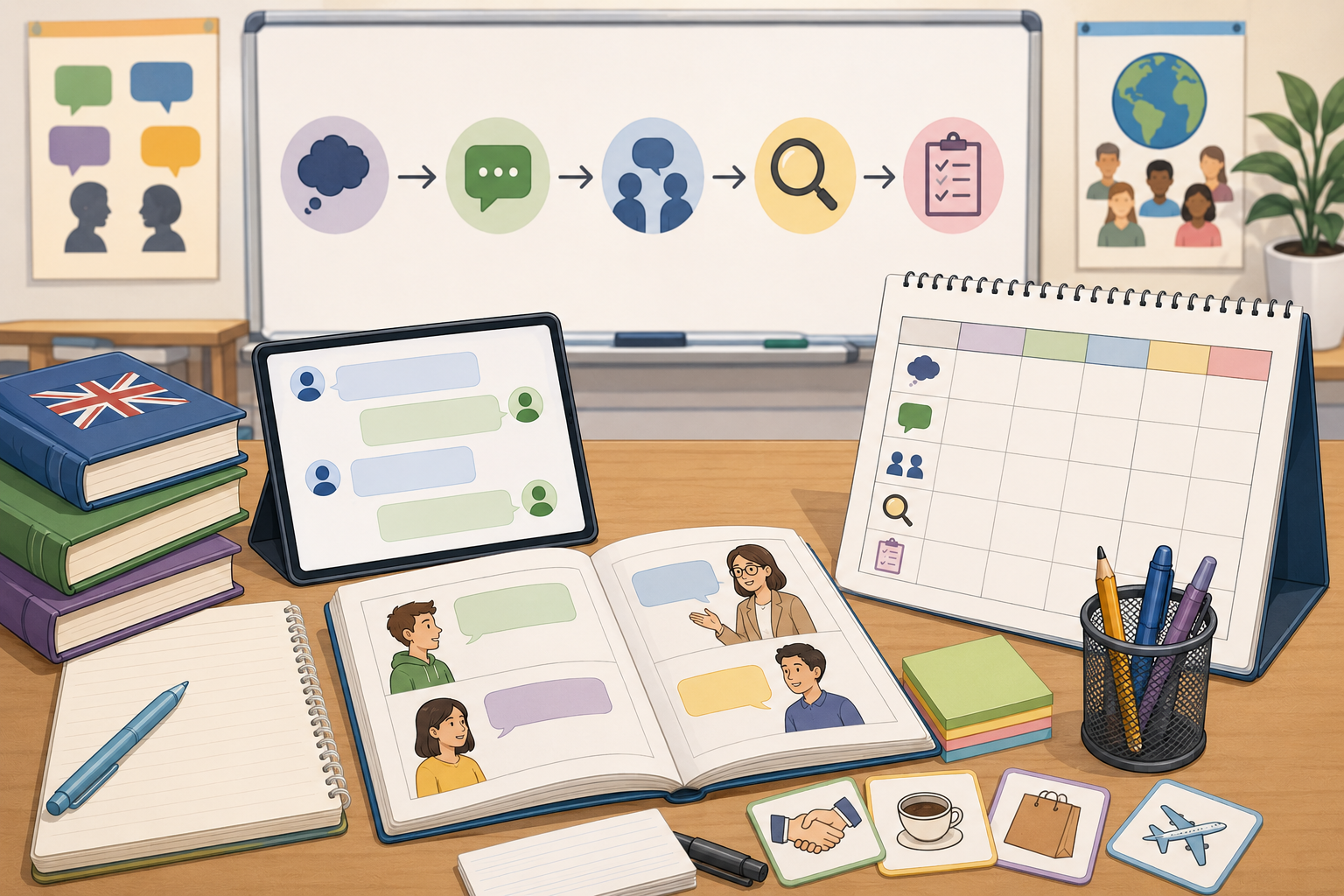
Fig 1. Image generated with ChatGPT (GPT Image 2), September 1, 2026.
Content
Communicating successfully in a foreign language requires more than producing grammatically correct sentences. Speakers constantly adapt their vocabulary, sentence structure, politeness and tone according to the audience, purpose and context of communication. The same intention can therefore be expressed in very different ways depending on who is speaking to whom. A request made to a close friend may be short and informal, while the same request addressed to a teacher, employer or unfamiliar person usually requires different vocabulary, more polite structures and a different degree of formality. These differences are part of register, which describes how language changes according to the social and communicative situation.
For language learners, register can be difficult to recognise because a sentence may be grammatically correct while still sounding unnatural or inappropriate in a particular context. Textbook examples often provide clear distinctions between formal and informal language, while real communication is much more flexible. Age, relationship between speakers, cultural expectations, medium of communication and communicative purpose can all influence the language that is used. A message that sounds natural in a conversation between teenagers, for example, may sound too informal in an email to a teacher, while an expression that is suitable for a formal letter may sound unnecessarily distant in everyday conversation.
Generative AI can produce and adapt dialogues very quickly, which makes it useful for exploring these differences. By changing individual elements of a prompt, such as the relationship between speakers, language level, purpose or degree of formality, learners can generate several versions of the same communicative situation and compare how the language changes. At the same time, AI-generated language is not automatically reliable simply because it sounds fluent. A model may produce language that is too formal, repetitive, culturally awkward, inconsistent with the requested level or not fully aligned with the instructions given in the prompt. Generative AI also works probabilistically, which means that similar prompts can produce different formulations.
This limitation is central to the activity rather than something to hide from learners. AI becomes most useful when students treat its output as language material to analyse rather than an answer to accept. In this lesson, students first examine how register changes across communication contexts and then use an LLM to modify one communicative variable at a time. They compare the resulting dialogues, identify which linguistic choices work and which do not, and revise parts of the output themselves. In this way, students practise both communicative competence in English and practical AI literacy: giving clear instructions, checking whether those instructions were followed and using their own linguistic judgement to decide whether the final result is appropriate.
Lesson plan
| Phase | Time | Activity |
| Introduction | 10 min | The teacher shows two short messages communicating the same request, for example one addressed to a friend and another to a teacher. Students identify differences in vocabulary, politeness and tone and suggest who might have written each message. |
| Input | 10 min | The teacher introduces the concepts of audience, purpose, context and register. Together, students identify features of formal and informal English and discuss why grammatically correct language is not necessarily appropriate language. |
| Exploration | 15 min | In pairs, students examine a short AI-generated dialogue for an everyday situation. They identify useful expressions and highlight anything that sounds unnatural, too formal, too informal or unsuitable for their English level. |
| Adaptation | 35 min | Students work through 2–3 rounds of predict → prompt → compare → diagnose. In each round, they change one aspect of the communication context and ask the AI to adapt the dialogue. |
| Reflection | 20 min | Students compare their versions and discuss which changes affected the language most. They identify where AI followed the instructions well, where it did not, and which expressions they would change themselves. |
Guiding questions: layering complexity
Pairs work through as many of the following rounds as time allows during the 35-minute adaptation phase. Most pairs should complete two rounds, while the third can be used as an extension:
- Round 1 — Change the relationship between speakers:
- Predict: Imagine that the same request is made to a close friend and to a teacher. What do you expect to change? Think about vocabulary, greetings, sentence structure and politeness.
- Prompt: Ask the AI to rewrite the dialogue for a different relationship between the speakers.
For example:
Rewrite this conversation between two friends as a conversation between a student and a teacher. Keep the meaning the same, but use polite, natural English suitable for a B1 learner.
- Compare: Compare the original and new dialogues. Identify at least three linguistic changes.
- Diagnose: Did the AI change only individual words, or did it also change sentence structure, greetings, requests and closing expressions? Which changes are appropriate? Is there anything you would change yourself?
- Round 2 — Change the communicative purpose:
Students now change what one speaker wants to achieve. For example:
asking for information → making a complaint
accepting an invitation → declining politely
asking for help → requesting permission
informal conversation → formal request
- Predict: What language do you expect to change when the purpose of the conversation changes?
- Prompt: Create a more detailed prompt that includes: speaker + situation + purpose + language level + tone
For example:
Create a short B1-level dialogue between a customer and a café employee. The customer received the wrong order and wants to solve the problem politely. Use natural everyday English and keep the dialogue to eight lines.
- Compare: Check whether the generated dialogue follows each part of the instruction.
- Diagnose: Select one expression that works well and one that you would rewrite. Explain why.
- Optional round 3 — Add constraints and challenge the AI:
Students make their instructions more specific.
For example:
Rewrite the conversation for two 15-year-olds. Keep the English at B1 level. Make it friendly and natural, but avoid slang. Keep the same communicative purpose.
- Predict: Which parts of the previous dialogue do you expect to change?
- Prompt: Ask the AI to produce the revised version.
- Compare: Check the response against every requirement in the prompt.
- Diagnose: Which instructions did the AI follow successfully? Which did it ignore or interpret differently?
Closing question (for the Reflect phase): At which point did changing the communication situation require more than simply replacing a few words, and what does this tell you about communicating effectively in another language?
Follow with: If an AI-generated dialogue is grammatically correct, how can you decide whether it is actually appropriate and natural for this particular situation?
Materials
- One laptop or tablet per student pair, with a browser
- Access to an approved LLM chat interface via the internet, or a locally installed model if internet access is restricted at school
- One short starter dialogue at approximately B1 level
- A short prompting / worksheet template for the adaptation rounds (predict → prompt → compare → diagnose)
- A language-evaluation checklist covering meaning, grammar, vocabulary, register, naturalness and fulfilment of instructions
- Teacher-prepared examples of formal and informal communication
- A short AI-use guideline reminding students not to enter personal information and to treat AI-generated language as material to analyse and improve, not as an answer key