2.6 History: Reconstruction of the past
A Day in Medieval Riga: What Can Sources Really Tell Us?
Subject: History Grade · Target Group: 7 (age 13–14) · Duration: 1 double lesson · AI: Learning WITH AI
| AI-related competencies (DUAL.AI.TEACHer Framework) – teacher level | Subject-specific learning objectives – student/learner level |
|
AF-TL-2b (AI foundations and applications × Teaching & Learning, Level 2 – Reflective Implementation):
“Teachers can organise lesson elements that embed AI use with clear pedagogical roles and strategies to verify the output elements.”
AF-FC-2b (AI foundations and applications × Facilitating Learners’ (AI) Digital Competence, Level 2 – Reflective Implementation):
“Teachers can implement guidance that helps learners develop practical AI skills, adapting the tasks to learners’ prior knowledge and the AI tools available.” |
By the end of the lesson, participants can:
|
Take-home message: What is shown is not necessarily what happened. Historical reconstructions combine evidence, reasonable inference and speculation. Understanding the past means recognising the difference between what we know from sources, what we can reasonably conclude, and what has been imagined to fill the gaps and to tell a better story.
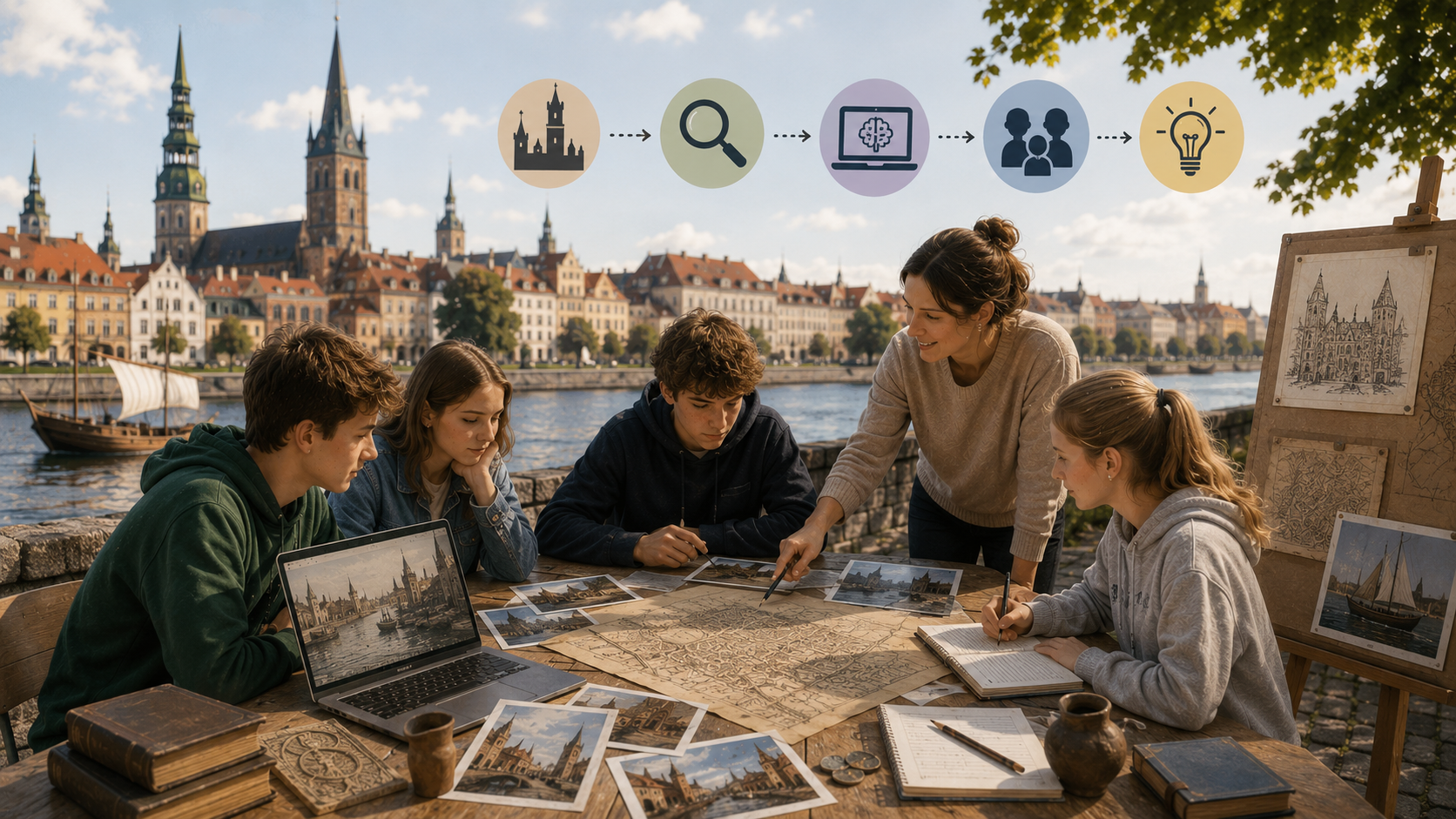
Fig 1. Image generated with ChatGPT (GPT Image 2), September 2, 2026.
Content
Historians cannot directly observe everyday life in the Middle Ages. Instead, they reconstruct it from traces that people left behind: written documents, buildings, objects, images, archaeological finds and other evidence. Different sources answer different questions. A trade record may reveal what goods entered a city, while an archaeological object may tell us something about what people owned or used. Neither source alone can recreate an entire day in someone's life.
Medieval Riga provides a useful case study. Riga developed rapidly after the beginning of the 13th century and became an important centre connecting trade between western Europe, Livonia and lands further east. By the late 13th century, it had become a major Hanseatic trading city. Trade and crafts supported the growth of merchant and craft organisations such as guilds.
Modern media can make the past feel much more complete than the surviving evidence actually allows. AI-generated history content such as Chloe VS History, for example, presents vivid “time-travel” scenes in which viewers appear to visit historical settings such as London during the Black Death. Clothing, streets, buildings, people and everyday activities are presented as if they were being directly observed. Yet these scenes are reconstructions: some details may be based on historical evidence, some may be reasonable inferences, and others may be speculative or inaccurate.
The same issue appears in historical films. A Knight's Tale creates a recognisably medieval world through armour, tournaments, clothing, architecture and social roles, while also deliberately introducing modern music, language and behaviour. It therefore provides a useful reminder that something can look convincingly historical without representing exactly what happened.
Generative AI works in a similar way. It can combine fragments of historical evidence into a coherent reconstruction of a day in medieval Riga, but it may also fill gaps with details that were never present in the sources. Some additions may be historically plausible; others may belong to another region, century or social group.
Students therefore need to distinguish between three levels of certainty:
Evidence – what historical sources directly support.
Inference – what can reasonably be concluded from that evidence.
Speculation – what has been imagined to fill the gaps.
Lesson plan
| Phase | Time | Activity |
| Hook | 10 min | Watch a Chloe VS History medieval AI video. Students identify what makes it believable and question which details are actually supported by evidence. |
| Input | 10 min | Introduce evidence – inference – speculation and practise distinguishing them. |
| Exploration | 15 min | Students analyse sources about medieval Riga without AI and establish what can genuinely be known. |
| Adaptation 1 | 20 min | AI reconstructs a day in medieval Riga from limited evidence. Students identify where it fills gaps. |
| Adaptation 2 | 20 min | More sources and stricter prompting are added. Students compare the two reconstructions. |
| Reflection | 25 min | Students transfer the same critical-thinking framework to a medieval historical film. |
Guiding questions: from AI output to classroom-ready activity
- Hook — Show approximately 30-60 seconds of Chloe VS History (TikTok/Youtube) AI-generated visit to London during the Black Death 1348:
- Discussion question: "What makes this look like a real visit to medieval London?"
- Introduce the problem: "How do we actually know that these details are historically accurate?" Key principle for this lesson (The importance of sources)
- Introduce the problem: "How do we actually know that these details are historically accurate?" Key principle for this lesson (The importance of sources)
- Historical evidence → inference→ speculation
- Input — Archaeological object: a medieval comb:
-
Provide statements about the object that need to be categorized into categories - evidence, inference, speculation. Example:
-
A bone comb was discovered in medieval Riga - evidence
-
Some inhabitants of Riga used combs - inference
-
The owner combed their hair before going to the market every morning - speculation
-
-
- Exploration — Group work. Analysing sources:
4 different sources about medieval Riga.
A) Riga as a Hanseatic trading city. Text from museum of the History of Riga and Navigation, “Riga as Part of Livonia (13th–16th cent.)”
B) Archaeological evidence of Hanseatic trade. Pictures from the museum of the History of Riga and Navigation, “Archaeological Evidence of the Hansa Trade in Riga.”
C) List of imports and exports from Riga. Trade information from museum of the History of Riga and Navigation, “Archaeological Evidence of the Hansa Trade in Riga.”
D) Riga's 1293 building regulations that restricted the construction of wooden houses after a fire outbreak.
Students fill out a worksheet for each source by answering the following question about each source: What do we know? What can we reasonably infer? What do we still not know?
- AI fills in the missing gaps:
Promp that is used by students: Using only Sources A and B, describe one morning in medieval Riga from the perspective of a young citizen. Write approximately 150 words. Make the scene vivid, but do not introduce information that cannot reasonably be inferred from the sources.
Students annotate the AI response:
-
Evidence
-
Reasonable inference
-
Unsupported / speculation
-
- AI revises its work using more evidences:
Improved prompt: Revise the reconstruction using Sources A–D. After every important historical detail, identify its source, for example [Source B]. If something is not directly stated but is reasonably inferred from the sources, write [Inference]. Remove details that cannot be supported or reasonably inferred.
Compare:
Version 1 → Version 2
Find:-
one detail that became more precise;
-
one detail AI removed;
-
one new detail supported by evidence;
-
one detail that still needs questioning.
-
- Reflection/Transfer of knowledge
Show a short classroom-appropriate scene or still from A Knight's Tale (2001)
Discussion question:
-
Based on the key principles from this lesson, what stands out as evidence, inference, speculation.
- If filmmakers change historical details to make a better story, is that necessarily wrong?
Final individual reflection:
Students complete:
-
Something can look historically convincing when...
-
Before believing something I see in a historical film, I should...
-
A historical film can invent or change details, but..
-
Materials
-
Projector/interactive whiteboard with speakers.
-
Chloe VS History medieval AI video for the hook.
-
Image of a medieval bone comb from Riga.
-
Evidence–Inference–Speculation mini worksheet.
-
Medieval Riga Source Pack: Hanseatic trade text, pictures of archaeological finds, imports/exports list, 1293 building regulations.
-
Source-analysis worksheet.
-
Student devices with access to an approved generative AI tool.
-
AI prompt and comparison worksheets for Rounds 1 and 2.
-
Short clip or still from A Knight’s Tale (2001) for reflection.